You just unboxed your brand new Blackstone griddle.
You’re excited. You want to cook smash burgers immediately. But then you read the manual and see the word “seasoning” — and suddenly you’re confused, nervous, and wondering if you’re going to ruin the whole thing before you even start.
Don’t worry. We’ve all been there.
Understanding what temp to season Blackstone griddles is actually simple once someone explains it clearly. And by the end of this guide, you’ll season your Blackstone perfectly — first try, every time.
Let’s break it all down.
Why Do You Need to Season a Blackstone Griddle?
Before we talk temperature, let’s understand WHY seasoning matters so much.
Seasoning is the process of building up layers of baked-on oil or fat on the surface of your griddle, similar to seasoning a cast iron skillet. The seasoning on the griddle plate acts as a protective layer and creates a non-stick cooking surface, and it naturally wears out over time, so it’s necessary to maintain and replace those layers with proper maintenance. The Flat Top King
In simple terms — your Blackstone’s steel surface has millions of microscopic pores. Seasoning fills those pores with hardened oil to create a smooth, non-stick, rust-proof cooking surface. Without it, food sticks to everything and rust forms fast.
Seasoning a griddle occurs through a process called polymerization — which happens when the right oil is heated at high enough temperatures to form a hard dark surface on your griddle. The Flat Top King
That dark, glass-like surface is what every Blackstone owner is working toward. And temperature is the key to getting there.
Table of Contents
What Temp to Season Blackstone — The Exact Answer
Here’s the direct answer you came for:
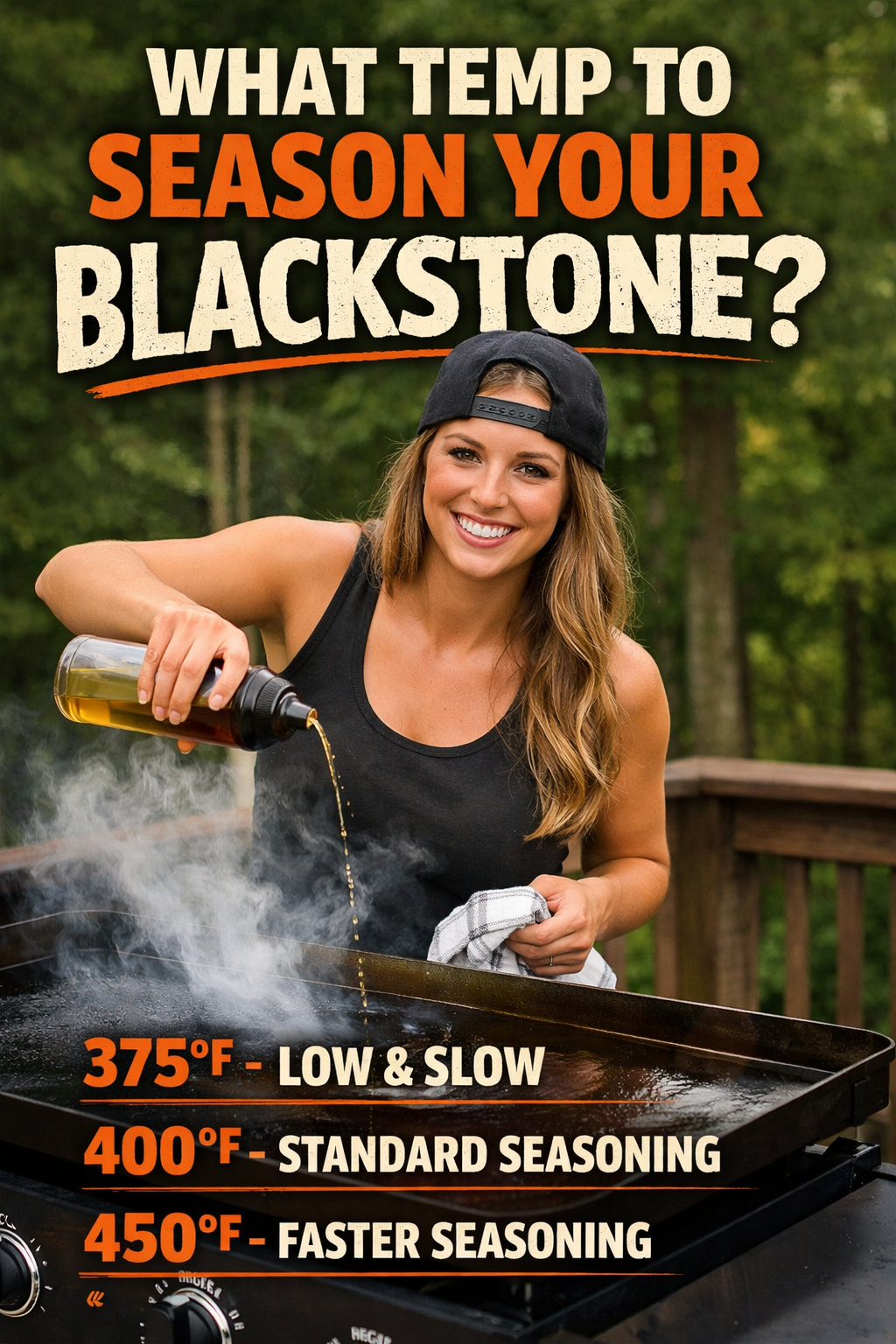
Seasoning temperature for Blackstone: 400°F – 450°F (Medium-High to High)
Preheat to the right temp — turn all griddle burners to medium-high heat at 400–450°F for the seasoning process. Blackstone
This temperature range is hot enough to trigger polymerization — the chemical process that bonds the oil to the steel surface — without burning the oil so fast that it doesn’t have time to properly cure.
Here’s a quick temperature reference for each stage of seasoning:
| Seasoning Stage | Temperature | Purpose |
|---|---|---|
| Initial Preheat | Max / High (450°F+) | Open up steel pores, darken surface |
| Oil Application | Let cool slightly (300°F–350°F) | Safe to apply oil with paper towel |
| Smoking/Curing | High (400°F–450°F) | Polymerize oil into non-stick layer |
| Final Cool Down | Off / Room temp | Let layers harden completely |
What Happens at the Wrong Temperature
Too low (under 300°F) — The oil won’t fully polymerize. It stays liquid, spreads around, and creates a sticky, gummy surface instead of a hard non-stick coating. This is the most common beginner mistake.
Too high (over 550°F) — The oil burns off too quickly before it can properly bond to the steel. You get smoke without proper seasoning layers forming.
Sweet spot (400°F–450°F) — The oil reaches its smoke point, burns off its organic compounds, and leaves behind hardened polymers bonded to your steel surface. That’s exactly what you want.
5 Burner BBQ Grill – Is It the Right Size for Your Backyard?
Step-by-Step — How to Season a Blackstone Griddle
Now that you know what temp to season Blackstone — here’s the complete process from start to finish.
Step 1 — Clean Your Brand New Griddle
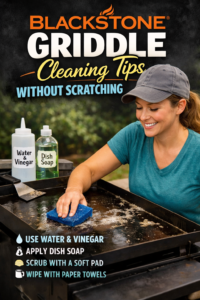
Your new Blackstone griddle has just been shipped, and you need to clean it up with soap first. This is just to remove any dust or debris from manufacturing and shipping. Fill a bucket with water, add a little dish soap, gently pour the soapy water on the griddle, then rinse with clean water. Blackstone Products
Dry the surface completely with paper towels. Any moisture left on the surface will interfere with the seasoning process.
Step 2 — Initial High Heat Preheat
Fire it up — turn all burners to high and let it heat for 10–15 minutes. You’ll see the surface start to darken — this is totally normal and exactly what you want. Blackstone Griddle 101
This initial high-heat preheat opens up the steel’s pores and begins the darkening process. Don’t panic when you see the surface changing color — that’s the whole point.
Step 3 — Let It Cool Slightly Before Adding Oil
Once the surface has darkened and you’ve preheated for 10–15 minutes — turn the burners down to medium and let the surface cool slightly to around 300°F–350°F before applying oil.
Why? Because applying oil to a 500°F+ surface causes it to smoke and burn off immediately before it can spread evenly. A slightly cooler surface gives you time to coat it properly.
Step 4 — Apply an Ultra-Thin Layer of Oil
Pour two to three tablespoons of oil on a 36-inch griddle — use a smaller amount for smaller griddles — and spread it around with paper towels. You’re aiming to get as thin a layer of oil as possible over the entire surface. If you spread the oil too thick, it will form a gooey mess when you turn up the heat. Family Handyman
Use paper towels to spread the oil evenly on the surface. Use tongs or heat-resistant gloves to avoid burning yourself. Make sure there aren’t any thick oil puddles or dry spots. Use the paper towel as if you’re trying to wipe all the oil off of the griddle surface. That’s how thin your oil layer should be. Blackstone Products
Step 5 — Turn Heat Back to High (400°F–450°F) and Wait
Turn all burners back to high. The oil will quickly begin to smoke, which is what you want. The smoke carries away most of the organic components of the oil, leaving behind the polymers that form the non-stick coating you’re after. Leave the heat on high until the smoking stops and the metal turns black. This can take as long as 30 minutes. Family Handyman
Be patient. Don’t rush this step. The smoking is the seasoning process happening in real time.
Step 6 — Repeat 3–4 Times
One round of seasoning is not enough. Apply a thin coat of oil to the entire surface, heat the griddle to high temperature, and let the oil smoke and oxidize for about 10–15 minutes. Repeat this process multiple times until you have built up a new seasoning layer. The Grill Coach
Most experienced griddle owners recommend 3–4 complete rounds of seasoning for a brand new Blackstone. Each round adds another layer of protection and builds up that dark, glass-like non-stick surface.
Step 7 — Apply a Final Protective Oil Coat
After your last seasoning round — let the griddle cool down completely. Apply a final coat of oil or conditioner after the final smoking. This prevents the metal surface from rusting, so you don’t want to smoke it off. Just let the griddle continue to cool down. Family Handyman
This final thin layer of oil acts as a protective barrier against moisture and rust while your griddle is stored between cooks.
Best Oils for Seasoning a Blackstone Griddle
Not every oil works equally well for seasoning. The key is choosing an oil with a high smoke point — ideally 400°F or above.
Olive oil and extra-virgin olive oil have a smoke point of 325°F which is too low — they burn and leave a sticky, bitter residue. Butter and margarine contain water and dairy solids that burn quickly, creating a gummy surface. Coconut oil’s smoke point of 350°F is also too low for proper polymerization. Blackstone
5 Burner BBQ Grill – Is It the Right Size for Your Backyard?
Best oils for seasoning a Blackstone:
| Oil | Smoke Point | Rating |
|---|---|---|
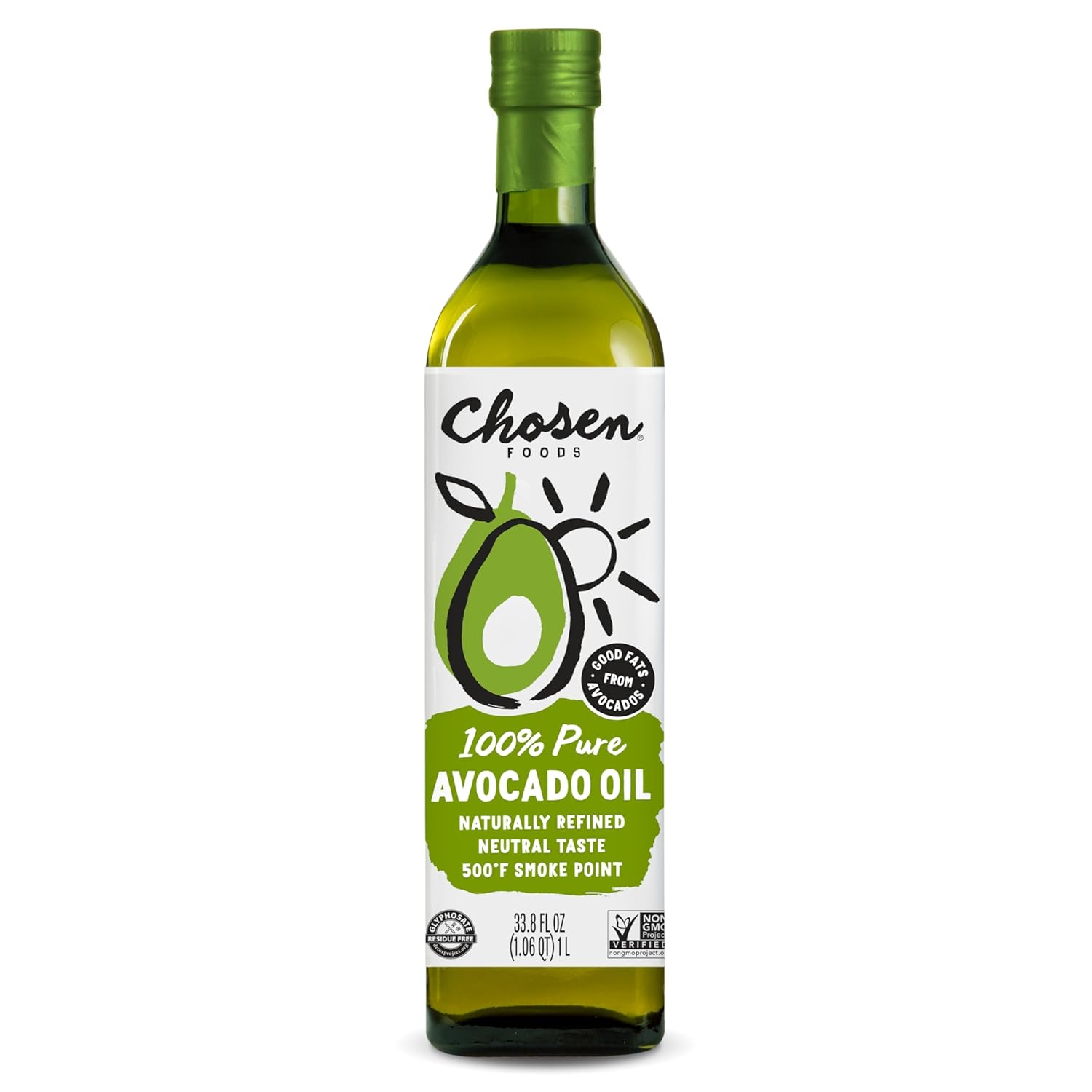
| Avocado Oil | 520°F | ⭐⭐⭐⭐⭐ Best |
| Grapeseed Oil | 420°F | ⭐⭐⭐⭐⭐ Excellent |
| Flaxseed Oil | 450°F | ⭐⭐⭐⭐ Great |
| Canola Oil | 400°F | ⭐⭐⭐⭐ Good |
| Vegetable Oil | 400°F | ⭐⭐⭐⭐ Good |
| Blackstone Conditioner | High | ⭐⭐⭐⭐⭐ Recommended |
After seasoning over 10 different griddles including 4 different Blackstone griddles, avocado oil and grapeseed oil are the best for seasoning a Blackstone griddle. The Flat Top King
Common Seasoning Mistakes to Avoid
Using too much oil — A thick coat of oil during the seasoning process will lead to future chipping and a build up of sticky gunk on your griddle plate. Blackstone Products Always use less oil than you think you need.
Only doing one round — One seasoning layer is not enough for a new griddle. Always do a minimum of 3–4 complete rounds before your first cook.
Not letting it cool between rounds — Rushing between seasoning rounds means the previous layer hasn’t fully hardened. Give it 10–15 minutes between rounds.
Using butter or bacon grease — You shouldn’t season your griddle with bacon or butter because these fats contain impurities, water, and milk solids that can negatively affect the seasoning process and make it harder to create a durable polymerized layer. Blackstone Griddle 101
Skipping the final oil coat — Never leave your Blackstone without a thin protective layer of oil after seasoning. Bare steel rusts fast — especially overnight or in humid conditions.
How to Know Your Blackstone Is Properly Seasoned
After 3–4 rounds of seasoning at the right temperature — here’s what a properly seasoned Blackstone looks like:
✅ Dark brown to jet-black color across the entire surface ✅ Slight sheen — not dull, not wet-looking ✅ Smooth to the touch — no rough or sticky spots ✅ Eggs slide around the surface easily ✅ Food releases without sticking during cooking
If your surface still looks silver or grey after seasoning — you need more rounds. Keep going until that dark patina develops.
How Often Should You Re-Season Your Blackstone?
Seasoning isn’t just a one-time task — it’s ongoing maintenance. Re-season about once a year minimum, but if there are some discolorations and it is still cooking fine, let it ride. However if it’s chipping off or getting in your food then it’s time to re-season. Blackstone Griddle 101
After every cook — wipe the surface clean, apply a thin layer of oil, and let it cool. This simple routine maintains your seasoning and prevents rust between uses.
Final Answer — What Temp to Season Blackstone
Here’s your complete temperature summary:
- Initial preheat: Max/High (450°F+) for 10–15 minutes
- Oil application: Cool slightly to 300°F–350°F first
- Smoking/curing: Turn back to High (400°F–450°F) until smoke stops
- Rounds needed: 3–4 complete rounds for a new griddle
- Best oil: Avocado oil, grapeseed oil, or Blackstone Conditioner
Follow these temperatures, use the right oil, apply ultra-thin layers, and repeat 3–4 times — and your Blackstone will have a perfect non-stick surface that gets better with every single cook.