You just got your Blackstone griddle.
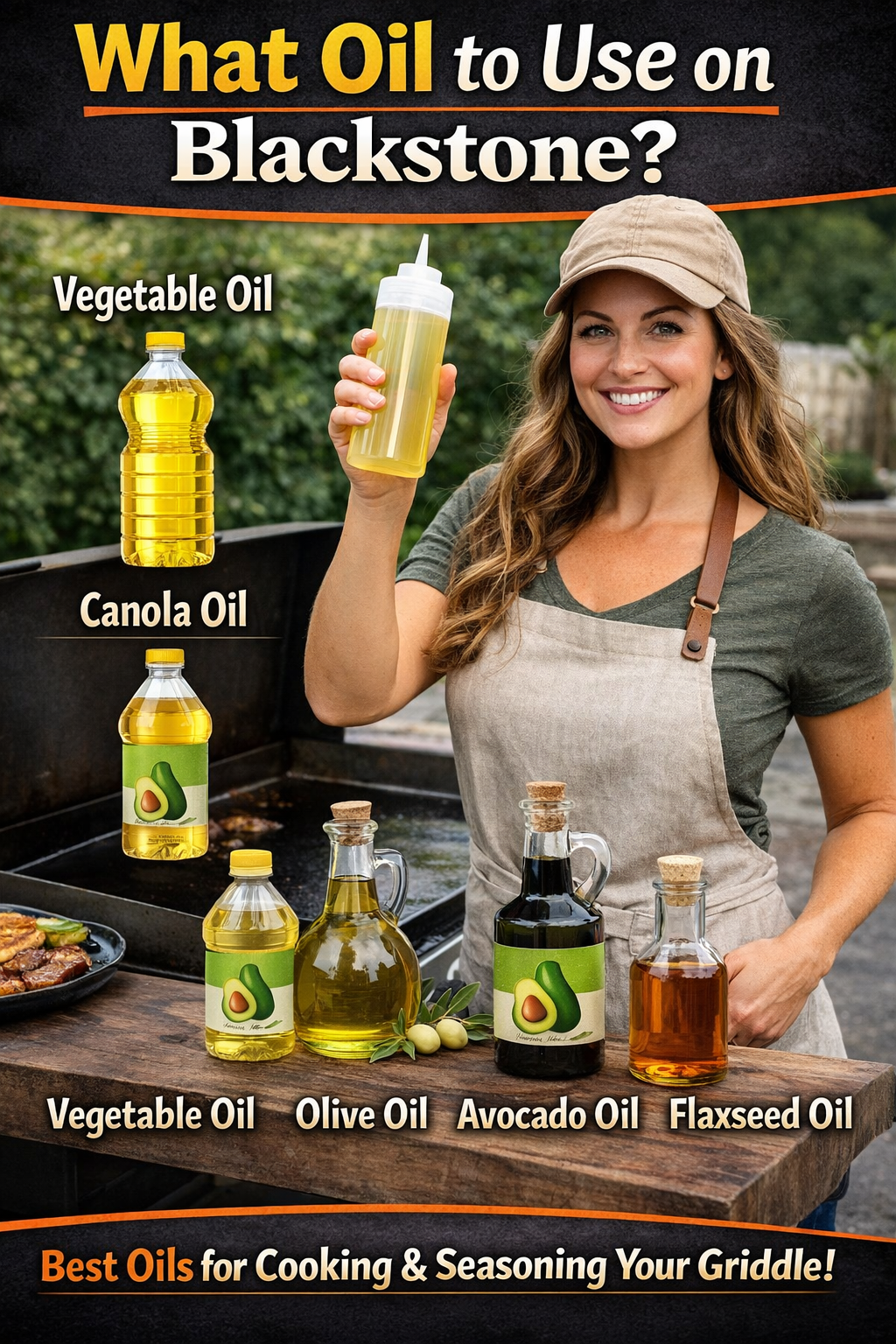
You’re standing in the grocery store aisle staring at dozens of oils — avocado, grapeseed, flaxseed, canola, vegetable, olive — and you have absolutely no idea which one to grab.
Sound familiar?
Don’t worry. The question of what oil to use on Blackstone griddles confuses almost every new owner. And the internet makes it even more overwhelming with conflicting opinions flying everywhere.
So let’s simplify it completely. In this guide — you’ll know exactly which oils to use for seasoning, which oils to use for cooking, which oils to avoid, and why it all matters.
Table of Contents
Why Does Oil Matter So Much on a Blackstone?
Before we get into specific oils — let’s understand why this choice matters.
Oil is to griddling as oxygen is to breathing. It’s probably the ingredient that you use more than anything else. It keeps your food from sticking to the Blackstone and can even enhance the flavor of your food. Blackstone Products
But there’s more to it than just non-stick performance. The right oil also:
- Builds the seasoning layer that protects your griddle from rust
- Withstands the high heat of the Blackstone without burning
- Adds or preserves the natural flavor of your food
- Makes cleanup faster and easier after every cook
The wrong oil — at the wrong temperature — can leave your food tasting burnt and rancid, damage your seasoning, or even create a sticky, gummy mess on your cooking surface.
The Most Important Factor — Smoke Point
Before picking any oil for your Blackstone, you need to understand one concept: smoke point.
The smoke point of an oil is the temperature at which it starts to smoke and burn. When an oil gets heated too far past its smoke point, the fat starts to break down, releasing free radicals and a substance called acrolein — the chemical that gives burnt foods their acrid flavor and aroma. Exceeding the smoke point of an oil also gets you closer to its flash point, which could result in actual flames on your griddle. The Flat Top King
Since Blackstone griddles regularly reach 400°F–650°F — you need oils with a smoke point of at least 400°F for both seasoning and cooking.
Here’s the complete oil smoke point reference guide:
| Oil | Smoke Point | Best For |
|---|---|---|
| Avocado Oil | 520°F | Seasoning + Cooking |
| Grapeseed Oil | 420°F | Seasoning + Cooking |
| Flaxseed Oil | 450°F | Seasoning only |
| Canola Oil | 400°F | Cooking |
| Vegetable Oil | 400°F | Cooking |
| Peanut Oil | 450°F | Cooking |
| Coconut Oil (refined) | 350°F | Light cooking only |
| Olive Oil (extra virgin) | 325°F | ❌ Too low |
| Butter | 302°F | ❌ Too low |
Best Oils for Seasoning Your Blackstone
Seasoning and cooking are two different jobs — and they need slightly different considerations. For seasoning, you want an oil that polymerizes well at high heat to create a hard, durable non-stick coating.
1. Avocado Oil — Best Overall Seasoning Oil
Avocado oil is a top recommendation for seasoning a Blackstone griddle. It’s also more of a multi-purpose product since you can cook with it as well. The Flat Top King
With a smoke point of 520°F — avocado oil handles the extreme heat of the seasoning process perfectly. It polymerizes into a smooth, durable coating and adds no detectable flavor to your food. And because you can also cook with it, one bottle does double duty.
Best for: Initial seasoning and cooking. The most versatile oil for Blackstone owners.
2. Grapeseed Oil — Best Budget Seasoning Oil
Pompeian’s grapeseed oil offers a smoke point of up to 510°F, making it perfectly suited for the intense heat of Blackstone griddle cooking. This oil has a light, subtle flavor that doesn’t interfere with the taste of your dishes. Airfryermag
Grapeseed oil is affordable, widely available, neutral in flavor, and has a high enough smoke point to handle the seasoning process without burning. A great everyday option.
Best for: Budget-friendly seasoning and everyday cooking.
3. Flaxseed Oil — Best for Polymerization
Flaxseed oil is the best oil to use when seasoning a Blackstone Griddle. The oil’s high smoke point allows it to withstand the heat of the surface without burning or smoking. The Grill Coach
Flaxseed oil creates an incredibly hard, glass-like seasoning layer because of its high polyunsaturated fat content. Many cast iron and griddle experts swear by it for the initial seasoning rounds. However — it has a strong flavor and isn’t great for cooking, so use it for seasoning only.
Best for: Initial seasoning rounds only — not for cooking.
4. Blackstone Griddle Seasoning & Cast Iron Conditioner — Best Dedicated Product
Blackstone highly recommends their Griddle Seasoning & Cast Iron Conditioner. Their experience has shown that the proprietary blend works incredibly well for initial seasoning and provides superior protection between uses. Long-term protection was particularly important in developing this seasoning to protect your investment. Blackstone Products
If you want the no-brainer option — this is it. Specifically formulated for Blackstone surfaces, it builds durable non-stick layers and protects the steel from moisture and rust between cooks.
Best for: New griddle owners who want the easiest, most reliable seasoning option.
Stove with Griddle – The Ultimate Kitchen Upgrade You Didn’t Know You Needed
Best Oils for Cooking on a Blackstone
Once your griddle is seasoned — you need a cooking oil that handles high heat, doesn’t overpower your food’s flavor, and keeps the surface lubricated for easy release and cleanup.
1. Avocado Oil — Best All-Around Cooking Oil
High smoke point oils like avocado oil are preferred for Blackstone cooking because the griddle gets hot fast. The key is using something that won’t burn easily. Blackstone Griddle 101
Avocado oil is the top pick for daily Blackstone cooking. High smoke point, neutral flavor, healthy fat profile, and it works at every temperature zone from low egg cooking to high-heat searing.
Best for: Everyday cooking — eggs, smash burgers, stir fry, pancakes, vegetables.
2. Canola Oil — Best Budget Cooking Oil
Canola oil is the most affordable high smoke point cooking oil and is available everywhere. Canola oil has a 450–470°F smoke point — this is probably the most common oil used by griddlers. Blackstone Products
Neutral flavor, affordable price, widely available — canola is the practical everyday cooking oil for Blackstone owners who don’t want to spend a lot.
Best for: Budget-friendly everyday cooking.
3. Vegetable Oil — Most Accessible Option
Vegetable oil with a 400°F smoke point works perfectly fine for most Blackstone cooking. It’s the oil most people already have in their kitchen — and it gets the job done without any fuss.
Best for: Beginners who want to use what they already have.
4. Peanut Oil — Best for High Heat Searing
Peanut oil has a 450°F smoke point and a slightly nutty flavor that pairs beautifully with steaks, smash burgers, and Asian-style stir fry dishes. If you love hibachi-style cooking on your Blackstone — peanut oil is your best friend.
Best for: High heat searing and Asian-inspired cooking.
5. Sesame Oil — Best Finishing Oil
Sesame oil works great as a finishing oil on dishes like fried rice. Just drizzle it on at the end for that hibachi-style flavor. Blackstone Griddle 101
Don’t cook with sesame oil — its smoke point is too low. But drizzled on as a finishing touch right before serving — sesame oil gives fried rice, stir fry, and noodle dishes that authentic restaurant flavor that nothing else can replicate.
Best for: Finishing drizzle on fried rice and Asian dishes — not for primary cooking.
What Oils to AVOID on a Blackstone
Not all oils are created equal — and some can actually damage your griddle or ruin your food.
❌ Extra Virgin Olive Oil
With a smoke point of only 325°F — extra virgin olive oil burns well below the temperatures your Blackstone operates at. It leaves a bitter, acrid taste on food and can gum up your seasoning layers.
❌ Butter
You shouldn’t season your griddle with bacon or butter because these fats contain impurities, water, and milk solids that can negatively affect the seasoning process and make it harder to create a durable polymerized layer. Blackstone Griddle 101
Butter is delicious as a finishing ingredient — add it to your food right at the end of cooking for flavor. But never use it as your primary cooking oil on a hot Blackstone.
❌ Coconut Oil (Unrefined)
Unrefined coconut oil has a smoke point of only 350°F — too low for Blackstone’s high heat cooking. Refined coconut oil performs better but still isn’t ideal for seasoning.
❌ PAM and Cooking Sprays
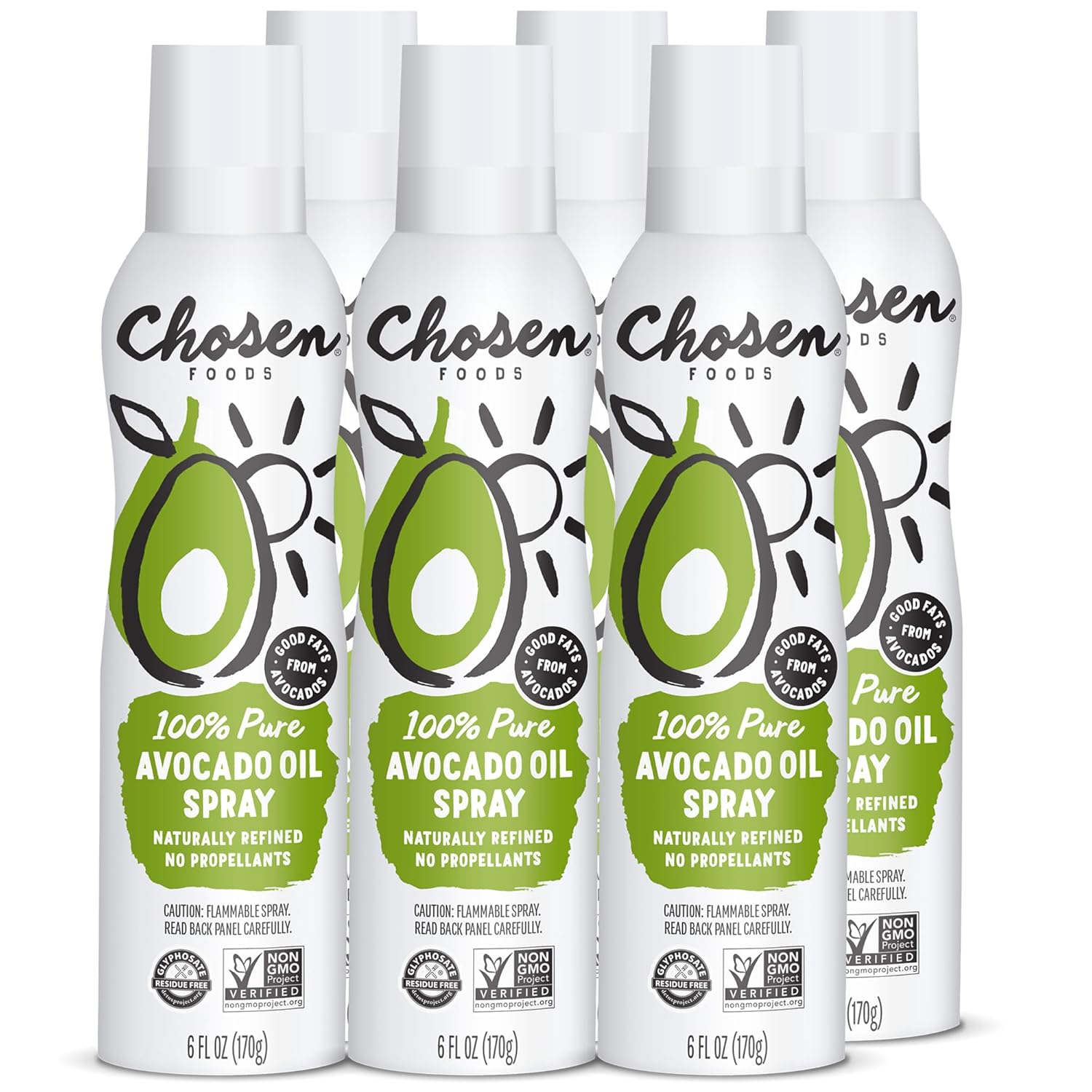
Blackstone recommends avoiding cooking sprays like PAM because of potential chemicals that can affect seasoning. If you want a spray option, buy a refillable oil spritzer and use your favorite oil. Blackstone Griddle 101
Cooking sprays contain additives and propellants that build up on your griddle surface over time — creating a sticky residue that’s hard to remove and damages the seasoning.
Seasoning Oil vs Cooking Oil — What’s the Difference?
Here’s the simple breakdown:
Seasoning Oil — Applied before cooking to build the protective non-stick layer on bare steel. Needs high smoke point and good polymerization properties. Applied in ultra-thin layers and burned off at high heat. Best options: avocado oil, grapeseed oil, flaxseed oil, Blackstone conditioner.
Cooking Oil — Applied during cooking to prevent food from sticking and add flavor. Needs high smoke point but can have more flavor character. Best options: avocado oil, canola oil, peanut oil, vegetable oil.
Neutral or light-flavored oils are preferred to avoid overpowering the natural flavors of your grilled food. Avocado and grapeseed oils are excellent for this purpose. Airfryermag
How Much Oil to Use on a Blackstone
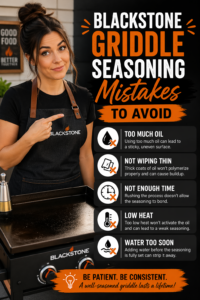
This is where most beginners go wrong — they use too much oil. And too much oil creates a sticky, gummy surface that’s harder to cook on and harder to clean.
The one secret to remember is to only use a very thin layer of oil for each coat. A thick coat of oil during the seasoning process will lead to future chipping and a build up of sticky gunk on your griddle plate. Blackstone Products
Rule of thumb: Use less oil than you think you need. For a 36″ griddle — 2–3 tablespoons for cooking. For seasoning — wipe it so thin that you can barely see it.
Stove with Griddle – The Ultimate Kitchen Upgrade You Didn’t Know You Needed
Tips for Using Oil on Your Blackstone
Use a squeeze bottle for cooking. A refillable squeeze bottle gives you precise control over how much oil hits the griddle. No more accidentally dumping half the bottle on your surface.
Apply oil to food, not just the griddle. Lightly oiling your proteins before they hit the griddle also helps prevent sticking — especially for delicate items like fish and eggs.
Store oils properly. Store your oils in a cool, dark place to prevent them from going bad. Leaving oil bottles outside all summer can cause food to taste terrible. Blackstone Griddle 101
Re-oil after every clean. After cleaning your Blackstone — always apply a thin layer of oil before the surface cools completely. This protects the steel from moisture and maintains the seasoning between cooks.
Don’t mix flavored and neutral oils. If you’re cooking eggs or pancakes — use a neutral oil so the food’s natural flavors shine. Save the flavored oils (sesame, peanut) for dishes where that flavor is intentional.
Quick Reference — What Oil to Use on Blackstone
| Situation | Best Oil |
|---|---|
| Initial seasoning | Blackstone Conditioner or Avocado Oil |
| Maintenance seasoning | Avocado Oil or Grapeseed Oil |
| Everyday cooking | Canola Oil or Avocado Oil |
| High heat searing | Avocado Oil or Peanut Oil |
| Eggs and pancakes | Avocado Oil or Canola Oil |
| Stir fry and fried rice | Avocado Oil or Vegetable Oil |
| Finishing drizzle | Sesame Oil |
| Never use | EVOO, butter (as primary oil), cooking sprays |
Final Answer — What Oil to Use on Blackstone
For most Blackstone owners — the simple answer is:
Avocado oil for everything. Season with it. Cook with it. It handles the high heat, has a neutral flavor, and a single bottle does every job your griddle needs.
If budget is a concern — canola oil for cooking and Blackstone’s own conditioner for seasoning is the most practical, affordable combination.
The most important rule of all? Use a neutral-flavored oil that can be used for both sautéing vegetables, crisping up hash browns, and seasoning your flat top grill — so you’re not buying multiple bottles for different purposes. The Flat Top King
Keep it simple. Keep it thin. And your Blackstone will reward you with years of perfect non-stick cooking.