One of the most common questions new owners ask is:
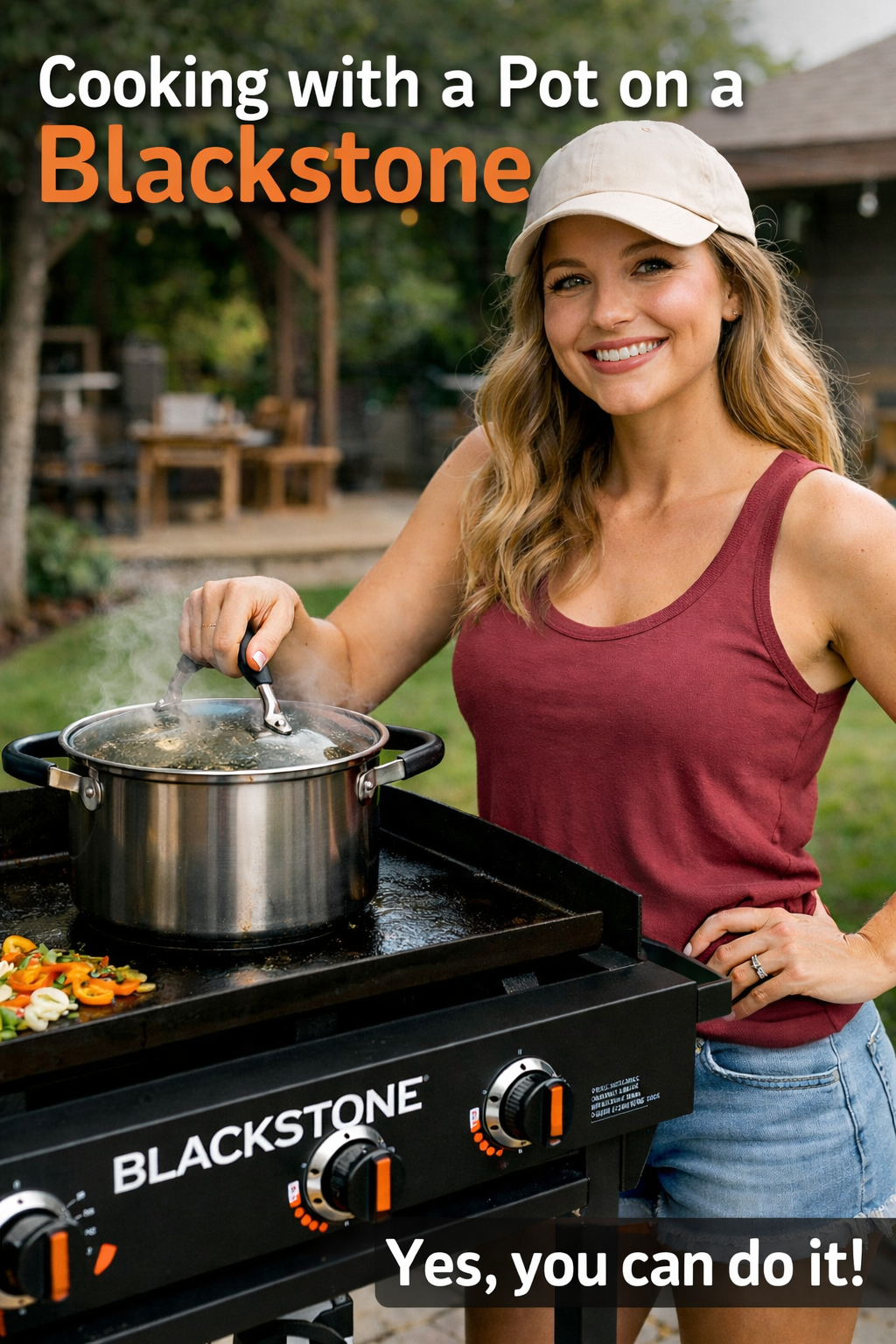
Can you put a pot on a Blackstone griddle?
The short answer is yes — you absolutely can.
But there are some practical considerations you should understand before placing a pot full of water or soup on your flat top.
Let’s break it down clearly.
Table of Contents
How a Blackstone Heats Differently
A Blackstone is not a traditional stovetop.
On a stove, the flame or heating element touches the bottom of the pot directly.
On a Blackstone, heat travels:
Burner → Thick steel griddle plate → Bottom of the pot
That extra layer of steel changes everything.
The griddle acts like a heat distributor — but also like a heat buffer.
This means:
It takes longer to heat liquids
It is less efficient for boiling
It works better for simmering than rapid boiling
So yes, you can use a pot — just understand the limitations.
What Type of Pots Can You Use?
Most common cookware materials are safe to use.
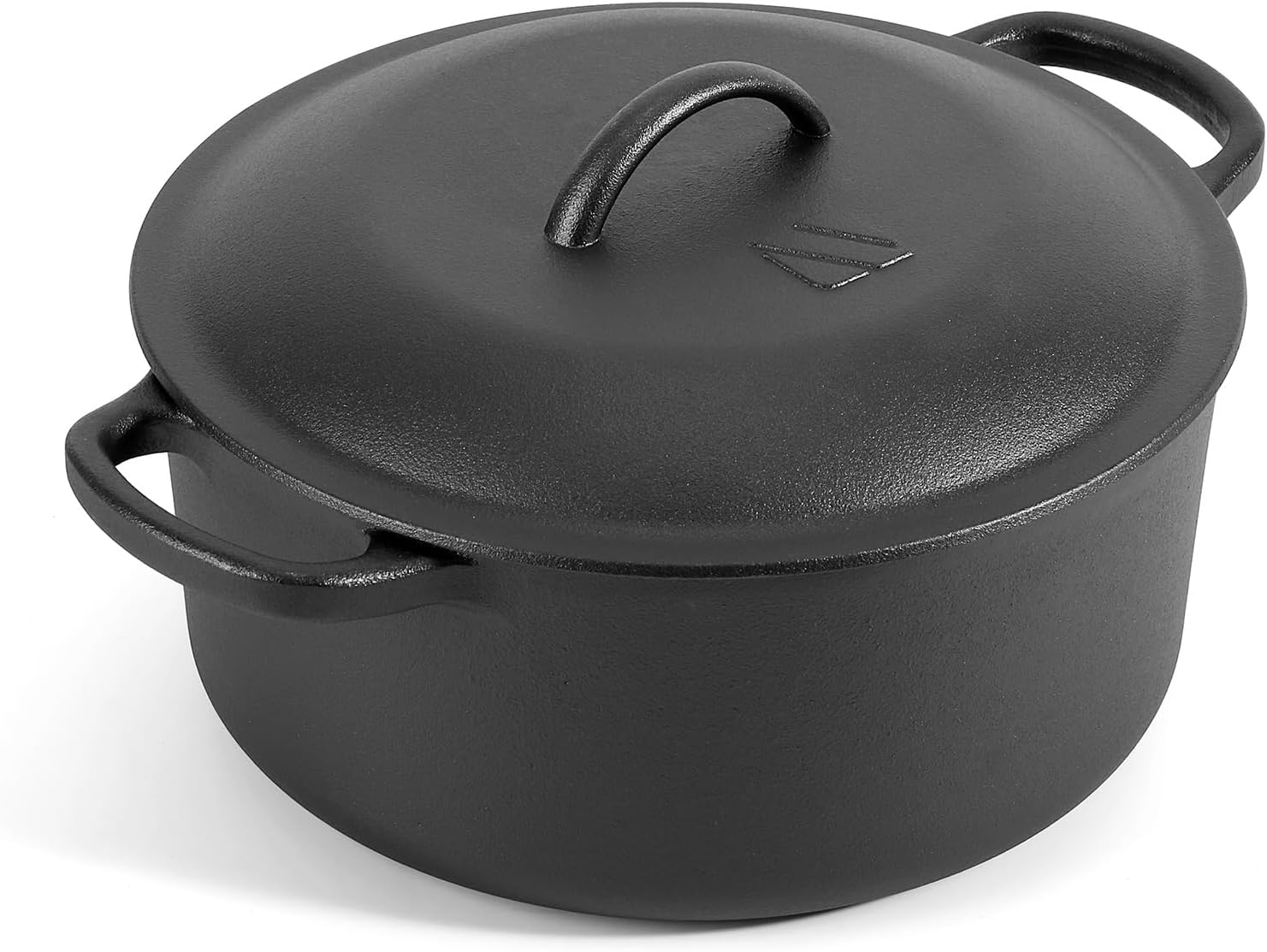
Cast Iron
Cast iron is completely safe and works well.
It handles high heat
Retains heat evenly
Pairs well with griddle surfaces
Many users cook chili, beans, and sauces in cast iron Dutch ovens on their Blackstone.
Stainless Steel
Stainless steel pots also work fine.
They heat slower on a griddle compared to a stovetop but function normally.
Carbon Steel
Safe and durable, similar behavior to stainless.
Aluminum Foil Pans
Disposable aluminum pans are commonly used for:
Warming sauces
Heating baked beans
Keeping food hot
They work, but they heat even slower due to thin material.
Why Boiling Takes Longer
If you’re trying to boil water for pasta, expect it to take noticeably longer.
Why?
Because the thick steel plate absorbs and redistributes heat before it ever reaches the pot.
That means:
More propane usage
Longer heating time
Lower peak efficiency
It’s not ideal for large pasta boils.
But it works for:
Simmering soups
Heating sauces
Small batch boiling
Can a Pot Warp the Griddle?
This is where many people get concerned.
If you place a very large pot filled with cold water on a fully preheated griddle, you create something called a heat sink effect.
What happens:
The cold liquid pulls heat rapidly from one small section
Temperature differences form across the plate
The steel can temporarily warp
Important note:
Most warping is temporary and disappears once the griddle cools.
Thicker plates (like PRO Series models) are more resistant to this.
To avoid this issue:
Do not slam a cold, heavy pot onto a blazing hot surface
Heat gradually
Avoid extreme temperature differences
Blackstone Mods – Best Upgrades to Improve Performance & Convenience
Will the Bottom of the Pot Get Dirty?
Yes — this is very common.
Because the griddle is seasoned with oil, the bottom of your pot may collect:
Sticky residue
Burned oil buildup
Dark seasoning marks
This is normal.
To prevent this, some users:
Place a thin layer of aluminum foil under the pot
Clean the griddle surface before placing cookware
Use dedicated “outdoor” pots
If you care about keeping your indoor cookware spotless, consider using separate outdoor pots.
Best Practices for Using a Pot on a Blackstone
Follow these simple tips for better results.
1. Preheat Gradually
Turn burners to medium first.
Allow the griddle and pot to heat together.
Avoid maximum heat immediately.
2. Start With Hot Water
If you’re boiling water:
Start with hot tap water
Or pre-boil indoors and finish outside
This dramatically reduces heating time.
3. Always Use a Lid
Using a pot lid is essential.
It traps heat
Speeds up boiling
Improves efficiency
If your Blackstone has a hood, closing it helps even more.
4. Use Medium-High Heat (Not Max)
High heat can:
Waste propane
Cause unnecessary warping
Overheat one zone
Medium-high is usually sufficient.
5. Don’t Leave One Burner on Full Blast
Distribute heat across two burners if possible.
This prevents extreme hot spots.
When Using a Pot Makes Sense
Using a pot on a Blackstone is ideal for:
Chili
Beans
Sauces
Gravy
Small pasta batches
Frying in shallow oil
Heating soups
Melting butter
It’s not ideal for:
Large pasta boils
Rapid high-volume water boiling
Pressure cooking
Blackstone Mods – Best Upgrades to Improve Performance & Convenience
Alternative Option: Side Burner
If you frequently need to boil water outdoors, consider:
A Blackstone model with a side burner
A separate propane burner attachment
Direct flame is more efficient for pots than flat steel heating.
Safety Considerations
Always:
Keep pot handles turned inward
Avoid overfilling
Watch for grease buildup
Never block grease drainage system
Remember, you’re cooking on an oil-seasoned surface — safety matters.
Final Answer
So, can you put a pot on a Blackstone?
Yes.
But it’s slower and less efficient than a traditional stove.
For simmering and moderate heating, it works perfectly.
For large boiling tasks, it’s not the most practical option.
If you use gradual heating, a lid, and proper technique, you’ll have no issues.