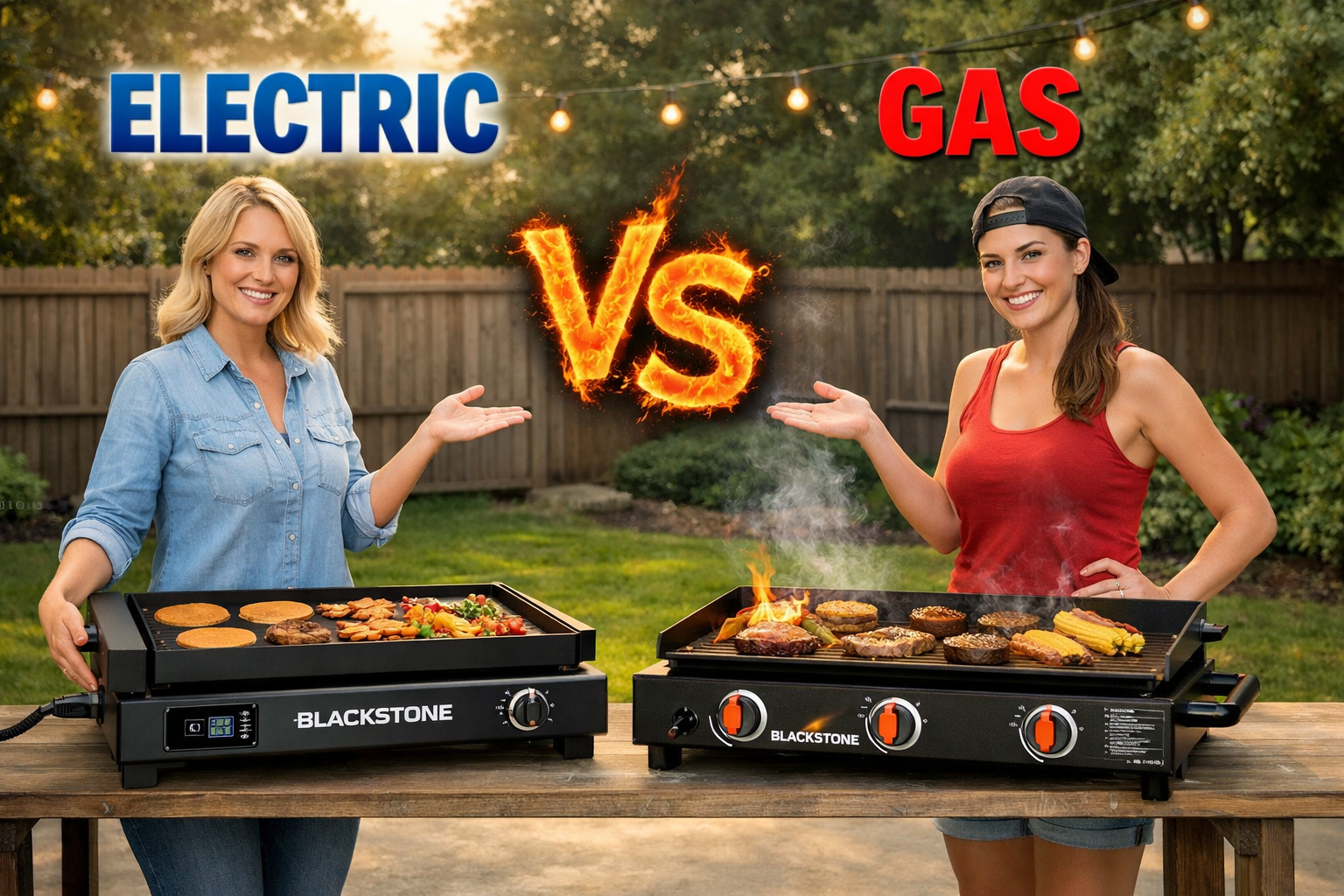
Choosing between Blackstone electric vs gas comes down to one main question:
Where and how are you going to cook?
Both models cook on a flat surface.
Both can handle breakfast, burgers, and stir fry.
But the performance difference is significant.
Gas models dominate in outdoor power and searing.
Electric models win in indoor convenience and ease of cleaning.
Let’s break everything down clearly so you can decide confidently.
Table of Contents
1. Heat & Searing Power
This is where gas and electric separate quickly.
Gas Blackstone
Gas griddles are heat monsters.
They can reach:
550°F to 600°F+
That high temperature creates:
Deep crust on burgers
Proper steak searing
Fast fajita charring
Better fried rice texture
They also preheat faster — usually within 10–15 minutes.
Gas is built for aggressive, restaurant-style cooking.
Electric Blackstone (E-Series)
Electric models typically max out around:
500°F
That’s still hot enough for:
Pancakes
Eggs
Bacon
Chicken
Vegetables
But when it comes to extreme searing, electric doesn’t quite match gas.
Electric units also take longer to recover heat when cold food is added.
If you dump frozen hash browns or several burgers on at once, surface temperature drops noticeably.
Recovery time can take 10–15 minutes.
2. Temperature Control
Gas and electric control heat very differently.
Gas Controls
Gas uses traditional burner knobs.
You visually adjust flame height.
Temperature is estimated unless you use a thermometer.
Heat zones are easy to create by adjusting burners independently.
But precision isn’t digital.
Electric Controls
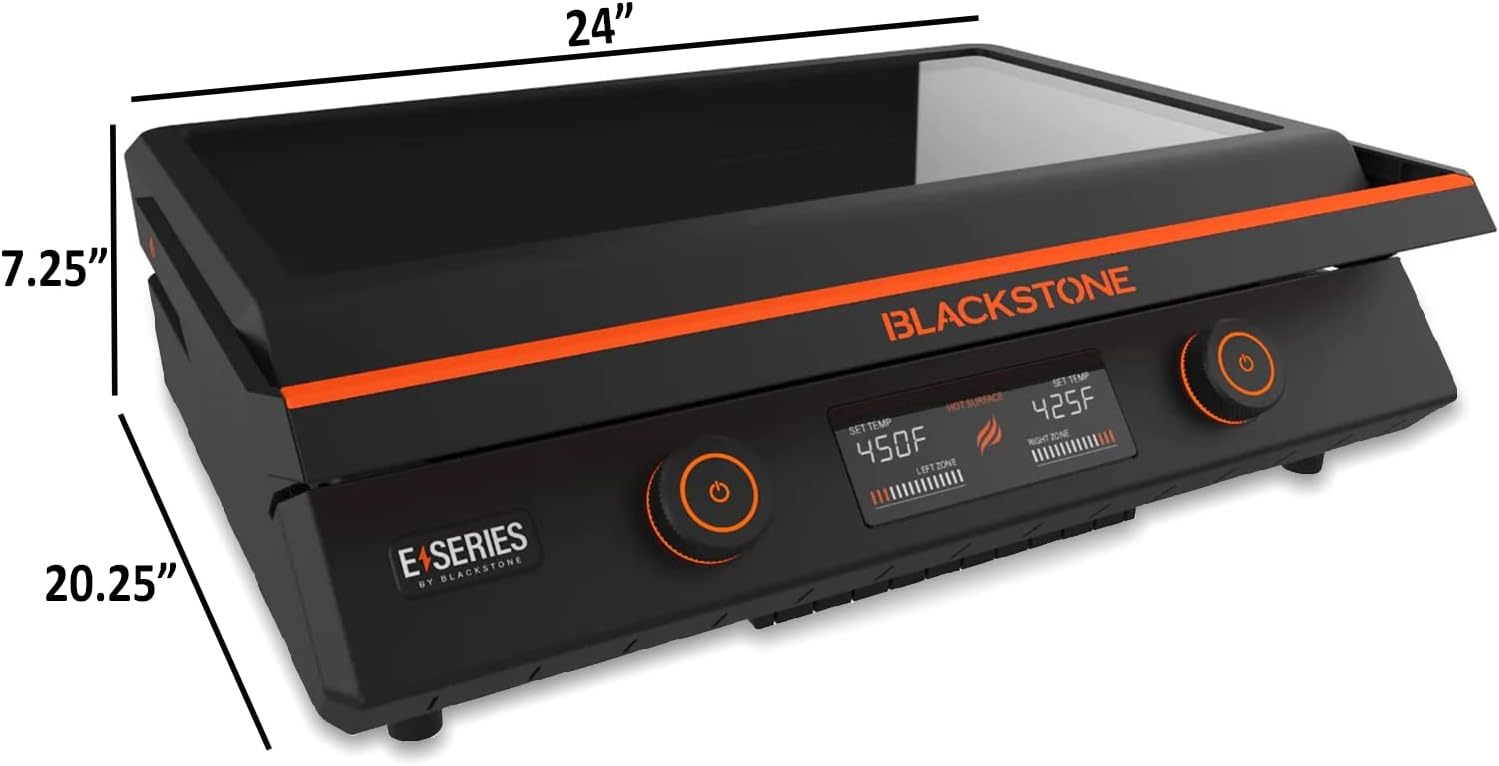
Blackstone E-Series electric models use:
Digital temperature control
5-degree increments
Range typically 200°F to 500°F
This makes electric ideal for:
Precise egg cooking
Consistent pancake browning
Low-temperature warming
If you like exact control, electric wins here.
3. Indoor vs Outdoor Cooking
This may be the deciding factor for many buyers.
Gas Models
Gas griddles are strictly for outdoor use.
They produce carbon monoxide.
They require ventilation.
They should never be used indoors.
They’re ideal for:
Backyards
Patios
Camping
Tailgating
Electric Models
Electric Blackstone E-Series units are approved for indoor use.
Perfect for:
Apartments
Condos
Winter cooking
Rainy weather
If you don’t have outdoor space, electric is your only safe option.
4. Surface Material & Maintenance
Another major difference.
Gas Griddle Surface
Material:
Cold-rolled steel
Requires:
Initial seasoning
Regular oiling
Rust prevention
Pros:
Develops natural non-stick surface
Handles metal utensils
Extremely durable
Cons:
Can rust if neglected
Needs maintenance
Steel improves over time with use.
Electric Griddle Surface
Material:
Ceramic-coated titanium non-stick
Pros:
No seasoning required
Easy wipe-clean surface
Low maintenance
Cons:
Cannot use metal utensils
Coating can scratch
Doesn’t develop better with age
Electric is easier but less rugged.
5. Cleaning Process
Gas models:
Scrape while warm
Wipe with paper towels
Light oil layer after
Electric models:
Allow surface to cool
Wipe clean
Avoid abrasive tools
Electric cleaning is easier, especially indoors.
Gas cleaning requires discipline but isn’t difficult once seasoned properly.
6. Cooking Capacity
Gas models are available in:
17”
22”
28”
36”
36-inch gas models provide massive cooking space — perfect for feeding 10+ people.
Electric models are typically smaller.
Most E-Series options are:
17”
22”
If cooking for large gatherings, gas has more options.
7. Portability
Gas portable units are great for:
Camping
Tailgating
RV travel
But they require propane tanks.
Electric units require:
Access to power outlet
So portability depends on your environment.
If you’re going off-grid, gas wins.
If cooking in your kitchen, electric wins.
8. Cost Comparison
Electric models are generally:
Lower upfront cost
Lower maintenance cost
No propane needed
Gas models:
Higher BTU output
Propane fuel cost
Longer lifespan
Long-term durability favors gas.
Convenience favors electric.
9. Cooking Experience
Gas cooking feels more:
Traditional
Powerful
Professional
Electric cooking feels more:
Controlled
Convenient
Beginner-friendly
If you love high-heat cooking and aggressive searing, gas is more satisfying.
If you prefer simplicity and indoor flexibility, electric is easier.
10. Who Should Buy Electric?
Choose electric if:
You live in an apartment
You need indoor cooking
You want low maintenance
You prefer digital control
You cook smaller portions
Electric is perfect for controlled, everyday cooking.
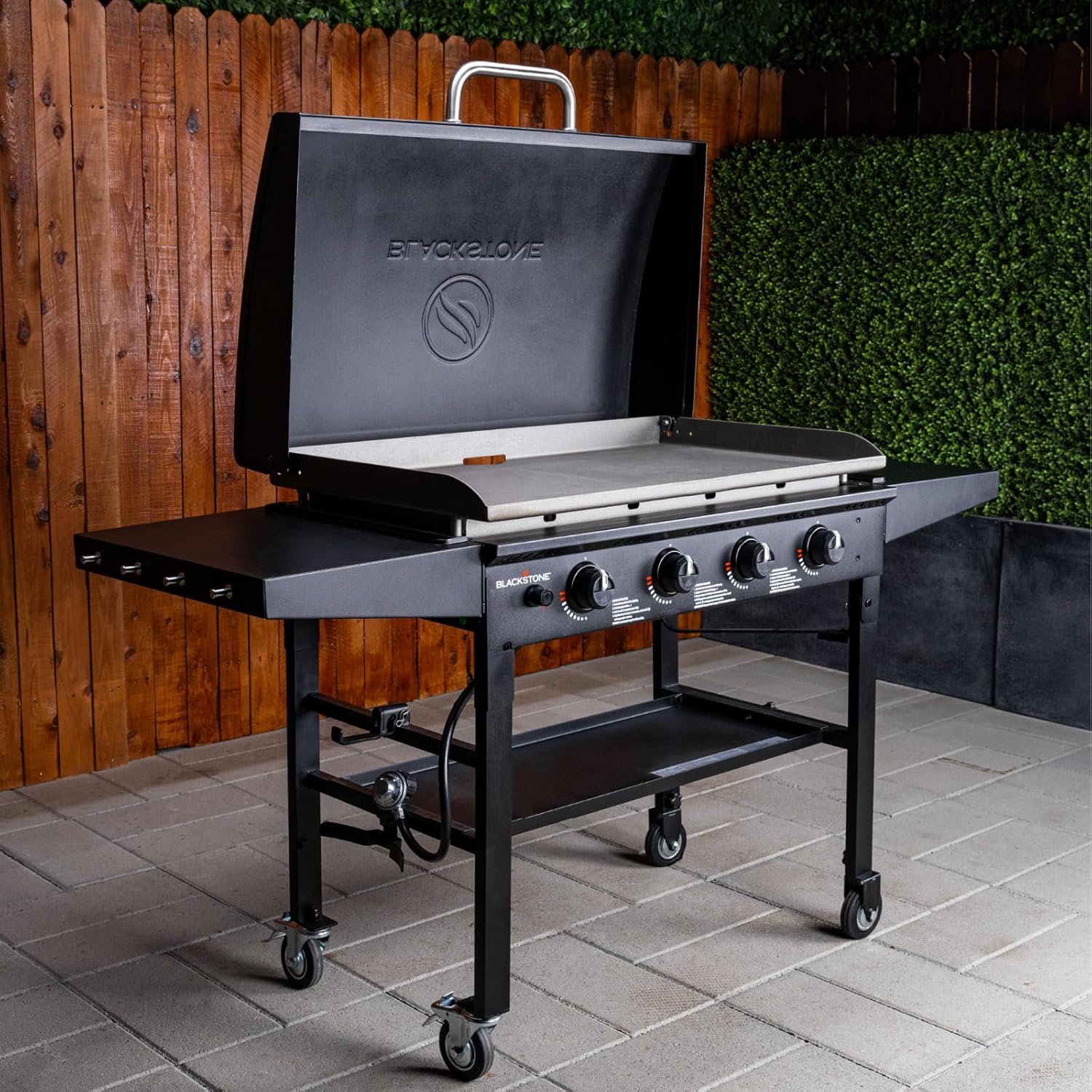
11. Who Should Buy Gas?
Choose gas if:
You cook outdoors regularly
You want high heat searing
You cook for large groups
You don’t mind seasoning
You want long-term durability
Gas delivers performance.
Can You Put a Pot on a Blackstone? (What You Need to Know)
Quick Comparison Table
Heat Output
Gas: Up to 600°F+
Electric: Up to 500°F
Indoor Use
Gas: No
Electric: Yes
Surface
Gas: Cold-rolled steel
Electric: Ceramic non-stick
Maintenance
Gas: Requires seasoning
Electric: Minimal
Utensils
Gas: Metal safe
Electric: Plastic/wood only
Cooking Power
Gas: Strong searing
Electric: Moderate searing
Real-World Cooking Example
Cooking 6 smash burgers:
Gas:
Strong crust
Fast recovery
Deep browning
Electric:
Longer cook time
Less crust
Noticeable temp drop
Cooking pancakes indoors:
Gas:
Outdoor only
Great results
Electric:
Perfect indoor setup
Precise temp control
Easy cleanup
Can You Put a Pot on a Blackstone? (What You Need to Know)
Final Verdict
When comparing Blackstone electric vs gas, there isn’t a universal “better” choice.
It depends on your needs.
If performance and searing power matter most → Gas wins.
If indoor cooking and convenience matter most → Electric wins.
Many serious outdoor cooks prefer gas for versatility and durability.
But for apartment living or winter cooking, electric is incredibly practical.
Choose based on your space, cooking style, and performance expectations.