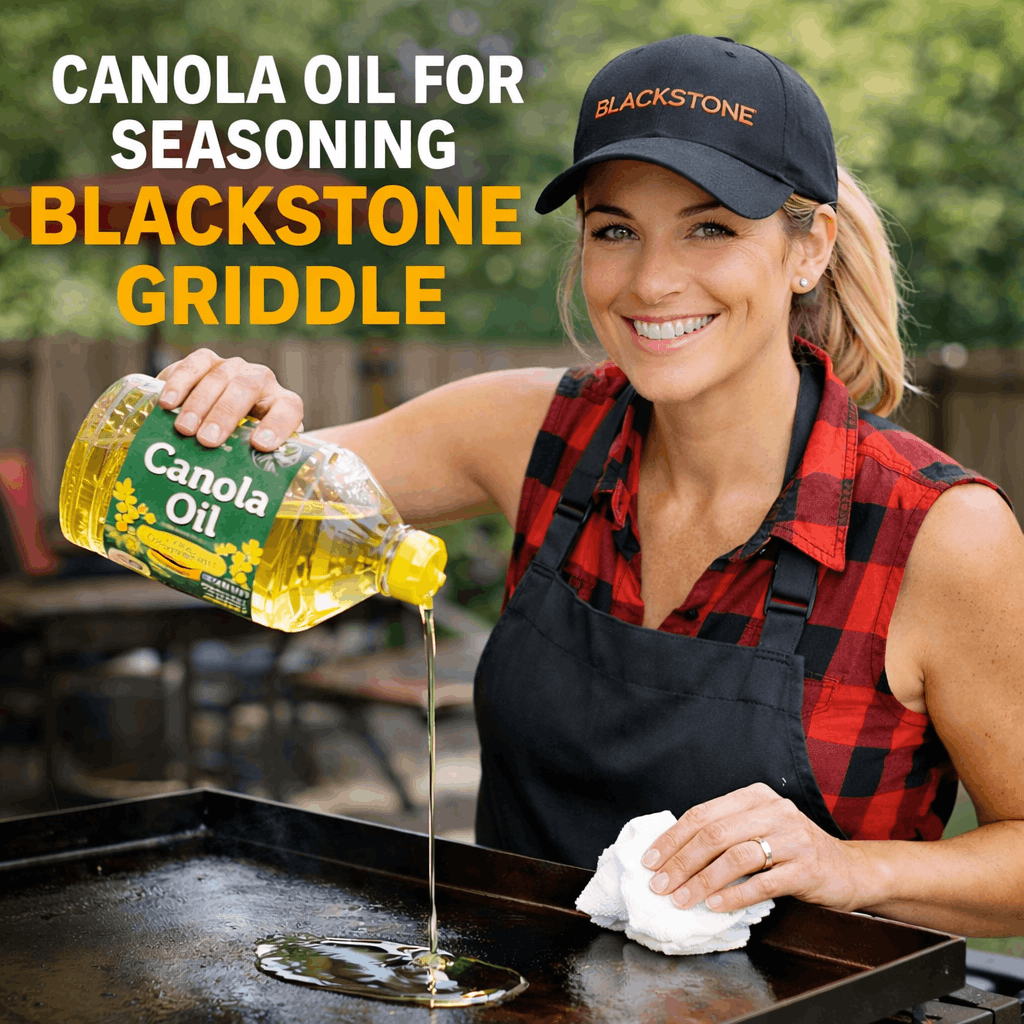
Canola Oil for Seasoning Blackstone Griddle
If you’re wondering whether canola oil is good for seasoning your Blackstone griddle, the short answer is yes — it absolutely works.
In fact, canola oil is one of the most commonly used oils for seasoning flat top griddles. It’s affordable, easy to find, and has a high enough smoke point to create a durable non-stick surface.
But just because it works doesn’t mean technique doesn’t matter. The difference between a smooth black finish and a sticky mess usually comes down to how you apply it.
Let’s break it down properly.
Table of Contents
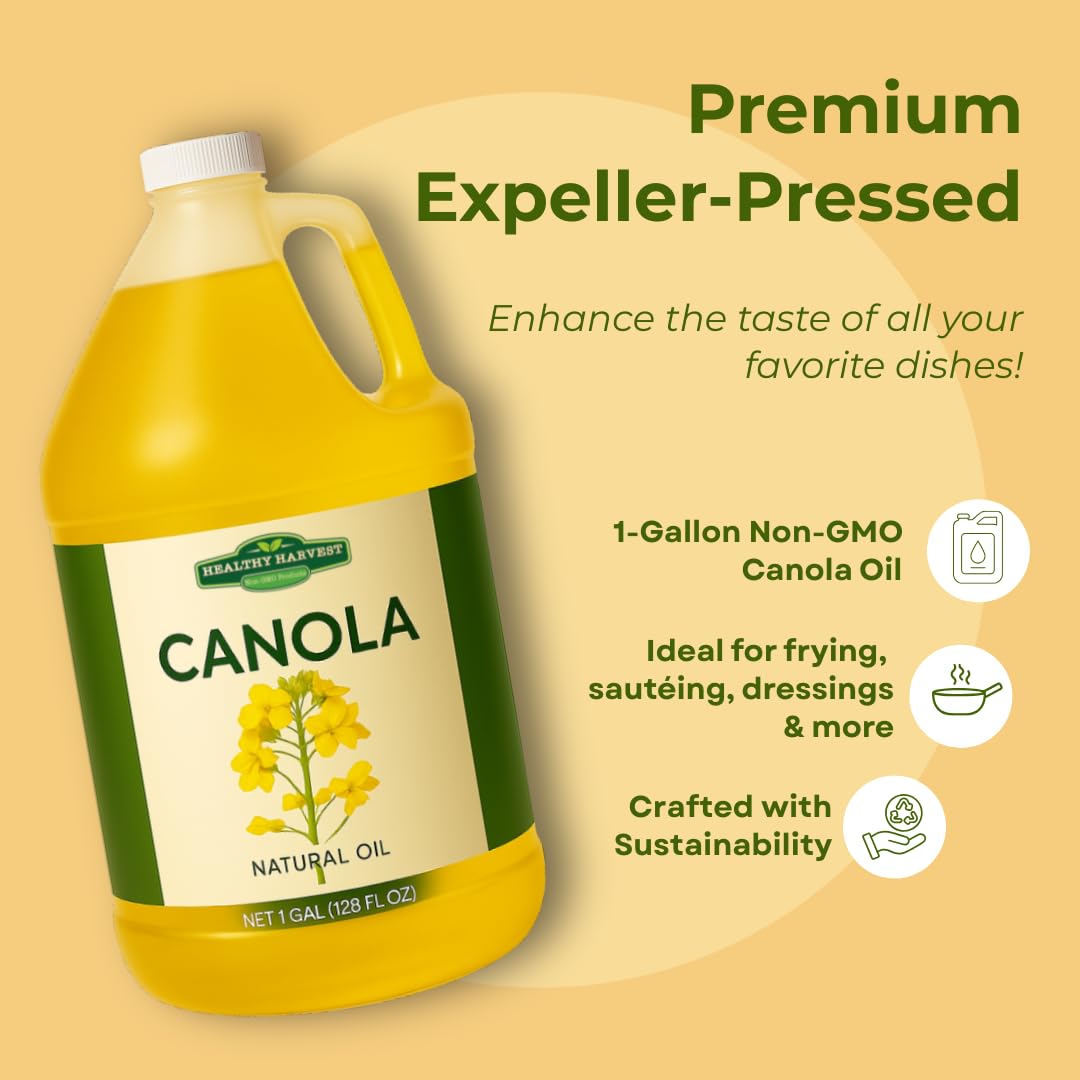
Healthiest Oil to Use on a Blackstone Griddle
Why Canola Oil Works for Blackstone Seasoning – Canola Oil for Seasoning Blackstone Griddle
Seasoning a Blackstone griddle involves heating oil past its smoke point so it bonds to the steel surface. This bonding process is called polymerization. When done correctly, it creates:
- A rust-resistant coating
- A natural non-stick surface
- Improved heat performance
- A darker, smoother cooking surface
Canola oil has a smoke point between 400°F and 475°F, which is ideal for griddle seasoning.
That means it can handle the high heat your Blackstone produces without breaking down too early.
Advantages of Using Canola Oil
1. Affordable
You don’t need expensive specialty oils. Canola oil is budget-friendly and widely available.
2. Neutral Flavor
It doesn’t leave behind strong smells or flavors during seasoning.
3. Easy to Work With
It spreads smoothly and cures evenly when applied in thin layers.
4. Reliable Results
Thousands of griddle owners use canola oil successfully for first-time seasoning.
Is Canola Oil Better Than Other Oils?
It depends on what you compare it to.
Compared to Avocado Oil
Avocado oil has a higher smoke point (up to 520°F), which makes it more heat-stable. However, it’s more expensive.
Compared to Grapeseed Oil
Grapeseed oil also performs well and bonds evenly, but again, costs more.
Compared to Olive Oil
Canola oil is far superior for seasoning. Olive oil has a lower smoke point and can create sticky buildup.
For most people, canola oil offers the best balance of cost, availability, and performance.
Step-by-Step: How to Season with Canola Oil
If you’re using canola oil for the first time, follow this process carefully.
Step 1: Initial Cleaning
- Wash the new griddle with warm water and mild dish soap.
- This is the only time you should use soap.
- Rinse thoroughly and dry completely.
Step 2: Preheat
- Turn all burners to high.
- Heat for 10–15 minutes.
- The steel will start turning brown or slightly blue. This is normal.
Step 3: Apply Thin Oil Layer
- Add 2–3 tablespoons of canola oil.
- Use tongs and a folded paper towel to spread it across the entire surface.
- Include corners and side walls.
Important: Wipe it down until it looks almost dry. Thick oil layers cause sticky buildup.
Step 4: Let It Smoke
- Allow the oil to heat until the smoke completely stops.
- This usually takes 15–30 minutes.
Step 5: Repeat 3–5 Times
- Apply another thin layer.
- Burn it off again.
- Continue until the surface becomes dark brown or black.
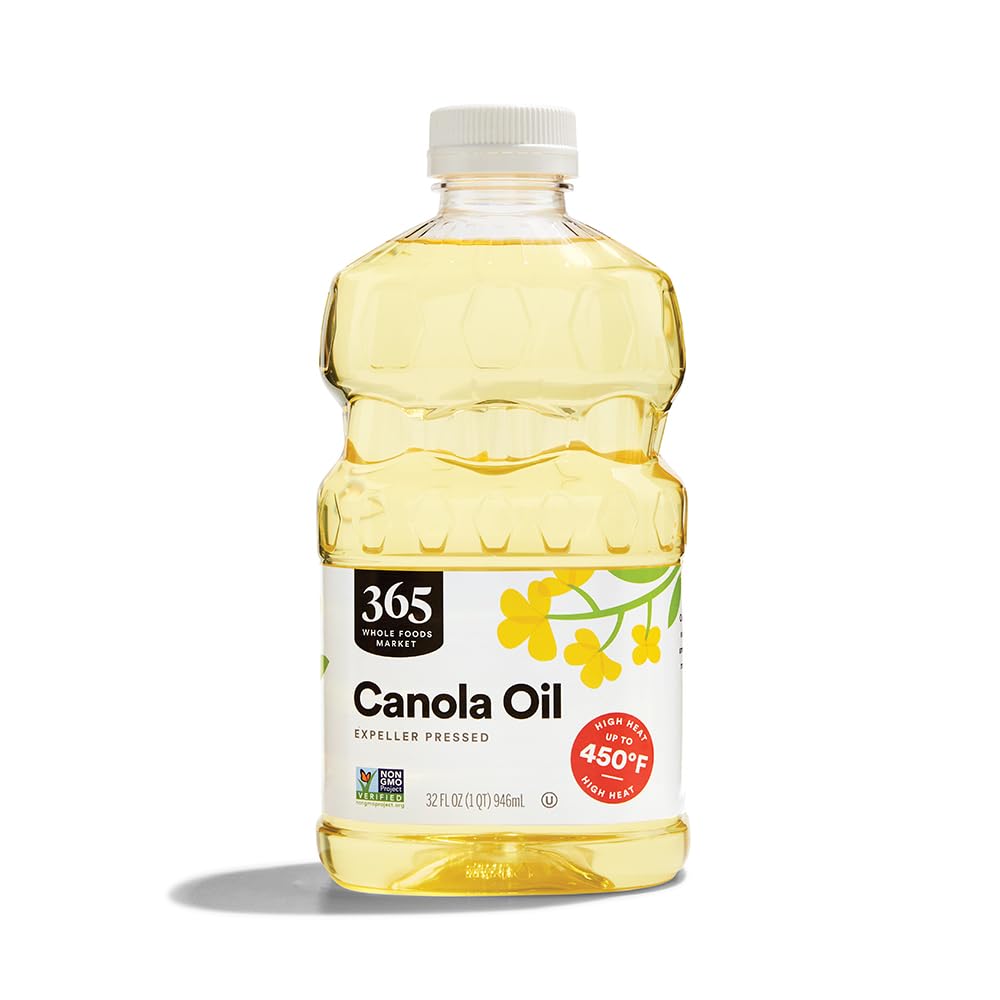
Common Mistakes When Using Canola Oil
Using Too Much Oil
This is the biggest mistake. Thick oil creates sticky patches.
Not Letting Smoke Fully Clear
If you apply the next coat too soon, the layer won’t bond properly.
Turning Heat Too Low
Seasoning requires high heat. Low heat won’t polymerize correctly.
How Long Does It Take?
Full initial seasoning with canola oil usually takes 1 to 2 hours.
Each layer requires:
- 15–30 minutes of heating
- Complete smoke cycle
Patience is key.
Can You Cook with Canola Oil After Seasoning?
Yes. Canola oil works well for everyday cooking.
It handles:
- Burgers
- Vegetables
- Pancakes
- Breakfast foods
- Searing meats
Because of its neutral taste, it won’t overpower your food.
Does Canola Oil Create a Durable Finish?
Yes — when applied correctly.
Over time, with repeated cooks and thin maintenance coats, your griddle will:
- Become darker
- Feel smoother
- Stick less
- Resist rust better
The seasoning strengthens with use.
Is Canola Oil Safe for High Heat?
Yes. Its smoke point is high enough for most Blackstone cooking.
If you frequently cook above 500°F, avocado oil may offer more stability. But for most users, canola oil is perfectly sufficient.
Maintenance After Cooking
After each cook:
- Scrape while warm
- Wipe clean
- Apply a very thin coat of canola oil
This keeps moisture away and protects your seasoning.
When Should You Re-Season?
You may need to re-season if:
- Rust appears
- Surface becomes sticky
- Seasoning flakes
- Food starts sticking excessively
In most cases, proper maintenance prevents major re-seasoning.
Who Should Use Canola Oil?
Canola oil is ideal for:
- First-time Blackstone owners
- Budget-conscious users
- Anyone wanting simple, reliable seasoning
- Beginners who want low-risk results
It’s not flashy, but it works.
Final Verdict
Yes — canola oil is an excellent choice for seasoning a Blackstone griddle.
It’s affordable, widely available, neutral in flavor, and strong enough to build a durable seasoning layer.
The secret isn’t the oil itself.
The secret is:
- Thin layers
- High heat
- Full smoke cycles
- Patience
Do that consistently, and your Blackstone will reward you with a smooth, non-stick surface that gets better over time.