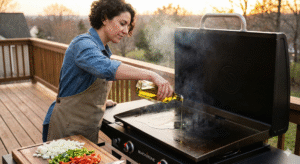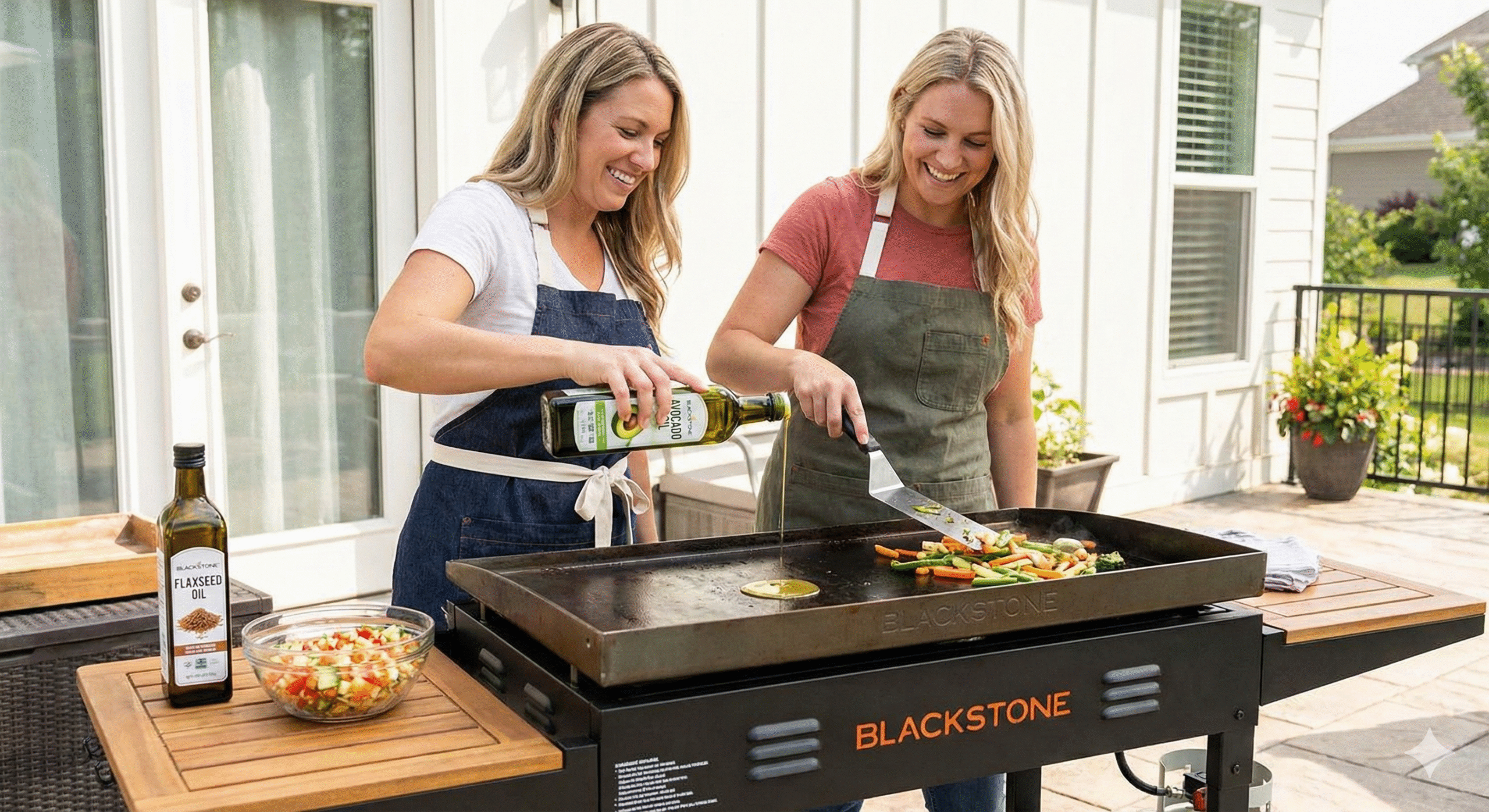
Best Oil for Blackstone Griddle
If you ask ten Blackstone griddle owners what oil they use, you’ll probably hear ten different answers. Some swear by avocado oil, others use grapeseed oil, and a lot of people quietly rely on canola or vegetable oil without ever talking about it. The confusion usually starts because people mix up seasoning oil and cooking oil, even though they don’t always behave the same way on a flat-top griddle.
The truth is simple: the best oil for a Blackstone griddle is one with a high smoke point and a neutral flavor. Once you understand why that matters, choosing the right oil becomes easy—and most common griddle problems disappear.
This guide explains which oils work best, why they work, and how to use them properly for both seasoning and everyday cooking.
Table of Contents
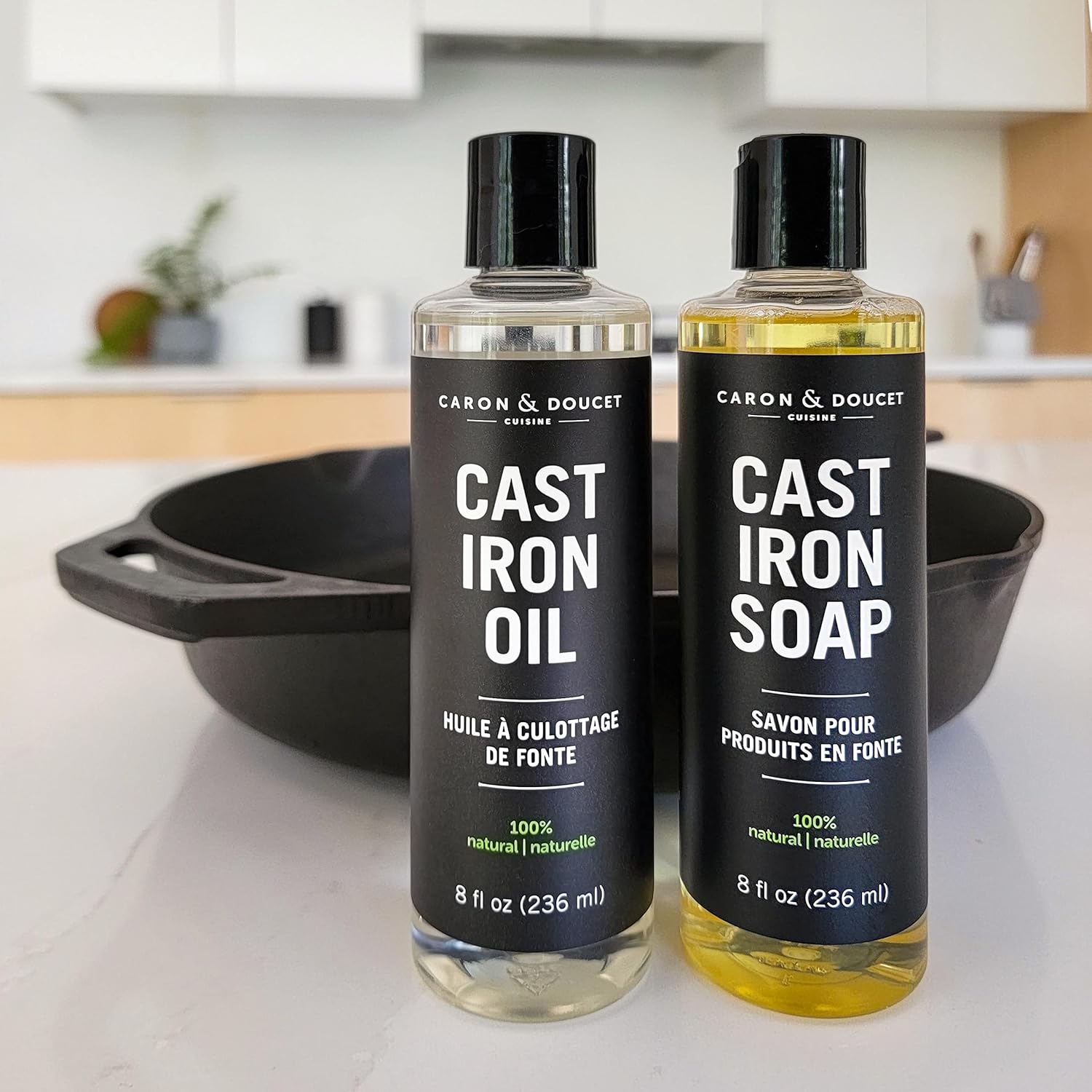
Why Oil Choice Matters More on a Blackstone – Best Oil for Blackstone Griddle
A Blackstone griddle isn’t like a normal pan. It’s large, made from cold-rolled steel, and designed to run hot. Very hot. That heat is great for searing, but it’s unforgiving if the oil can’t handle it.
When oil is pushed past its smoke point, it doesn’t protect the surface—it burns. Burnt oil leads to:
- excessive smoke
- sticky residue
- uneven seasoning
- food sticking
- faster rust formation
That’s why high smoke point oils are the foundation of good Blackstone cooking and seasoning.
The Core Rule: High Smoke Point + Neutral Flavor
The best oils for a Blackstone share two qualities:
- High smoke point – so they don’t burn at griddle temperatures
- Neutral flavor – so they don’t overpower food
Oils that meet these criteria can be used for:
- initial seasoning
- maintenance seasoning
- high-heat cooking
- general everyday use
Now let’s talk about the oils that actually do this well.
Avocado Oil: The Gold Standard
Avocado oil is widely considered the best all-around oil for a Blackstone griddle. With a smoke point around 520°F, it handles extreme heat without breaking down. That makes it equally good for seasoning and cooking.
Many experienced griddle owners prefer avocado oil because it:
- polymerizes cleanly during seasoning
- doesn’t smoke aggressively
- doesn’t add flavor
- works for searing, sautéing, and maintenance
The only real downside is cost. Avocado oil is more expensive than canola or vegetable oil, but performance-wise, it’s hard to beat.
Grapeseed Oil: Smooth and Reliable
Grapeseed oil sits just slightly below avocado oil in smoke point, but it’s still an excellent choice. It spreads easily, dries quickly during seasoning, and leaves a smooth, even surface.
People who like grapeseed oil often mention that:
- seasoning layers feel lighter
- the surface looks more uniform
- food releases easily
For anyone who wants consistent results without heavy oil buildup, grapeseed oil is a strong option.
Canola Oil: The Practical Favorite
Canola oil doesn’t get flashy recommendations, but it has been used successfully on flat-top griddles for decades. It’s affordable, widely available, and performs reliably when applied in thin layers.
For seasoning, canola oil works well if you:
- use very small amounts
- allow full burn-off
- repeat multiple thin coats
Many Blackstone owners start with canola oil simply because it’s already in the kitchen—and never feel the need to switch.
Vegetable Oil: Simple but Effective
Vegetable oil often gets overlooked, but it performs similarly to canola oil. It has a high smoke point and neutral flavor, making it perfectly suitable for both seasoning and cooking.
The key with vegetable oil is technique, not the oil itself. Thick layers cause problems; thin layers work just fine.
If budget and availability matter, vegetable oil is a completely valid choice.
Blackstone Seasoning & Conditioner: Purpose-Built Option
Some owners prefer using a product made specifically for Blackstone griddles, especially during first seasoning. These blends are engineered to polymerize predictably and protect the steel long-term.
For beginners who don’t want to experiment, Blackstone Griddle Seasoning & Conditioner removes guesswork and delivers consistent results.
Oils That Cause Problems (and Why)
Not all oils are bad—but some are poorly suited for a Blackstone.
Extra virgin olive oil has a low smoke point and burns too quickly during seasoning.
Butter and bacon grease contain solids and additives that break down before bonding properly.
Flavored oils interfere with seasoning and can create uneven layers.
These oils are best saved for specific low-heat cooking situations, not for building or maintaining seasoning.
Best Oils for Everyday Cooking
Once your griddle is properly seasoned, you have more flexibility.
For high-heat cooking like burgers, steaks, smash tacos, and stir-fry:
- avocado oil
- grapeseed oil
- canola oil
For medium or lower heat cooking like eggs, vegetables, and seafood:
- light olive oil
- butter (often mixed with a high smoke point oil)
Butter adds incredible flavor, but it burns quickly on its own. Mixing it with avocado oil lets you keep the taste without the smoke.
Can You Use Olive Oil on a Blackstone Griddle?
How Oil Choice Affects Long-Term Performance
Over time, the oil you use influences:
- how smooth the surface feels
- how evenly food cooks
- how often re-seasoning is needed
Using high smoke point oils consistently builds a stronger, more stable patina. Switching oils constantly—especially low smoke point ones—often leads to patchy seasoning.
Thin Layers Matter More Than Brand
One of the biggest misconceptions is that a “better” oil fixes bad seasoning. It doesn’t.
Seasoning fails when:
- oil layers are too thick
- burn-off isn’t complete
- heat isn’t high enough
- cleaning is skipped
No matter which oil you choose, thin layers always win.
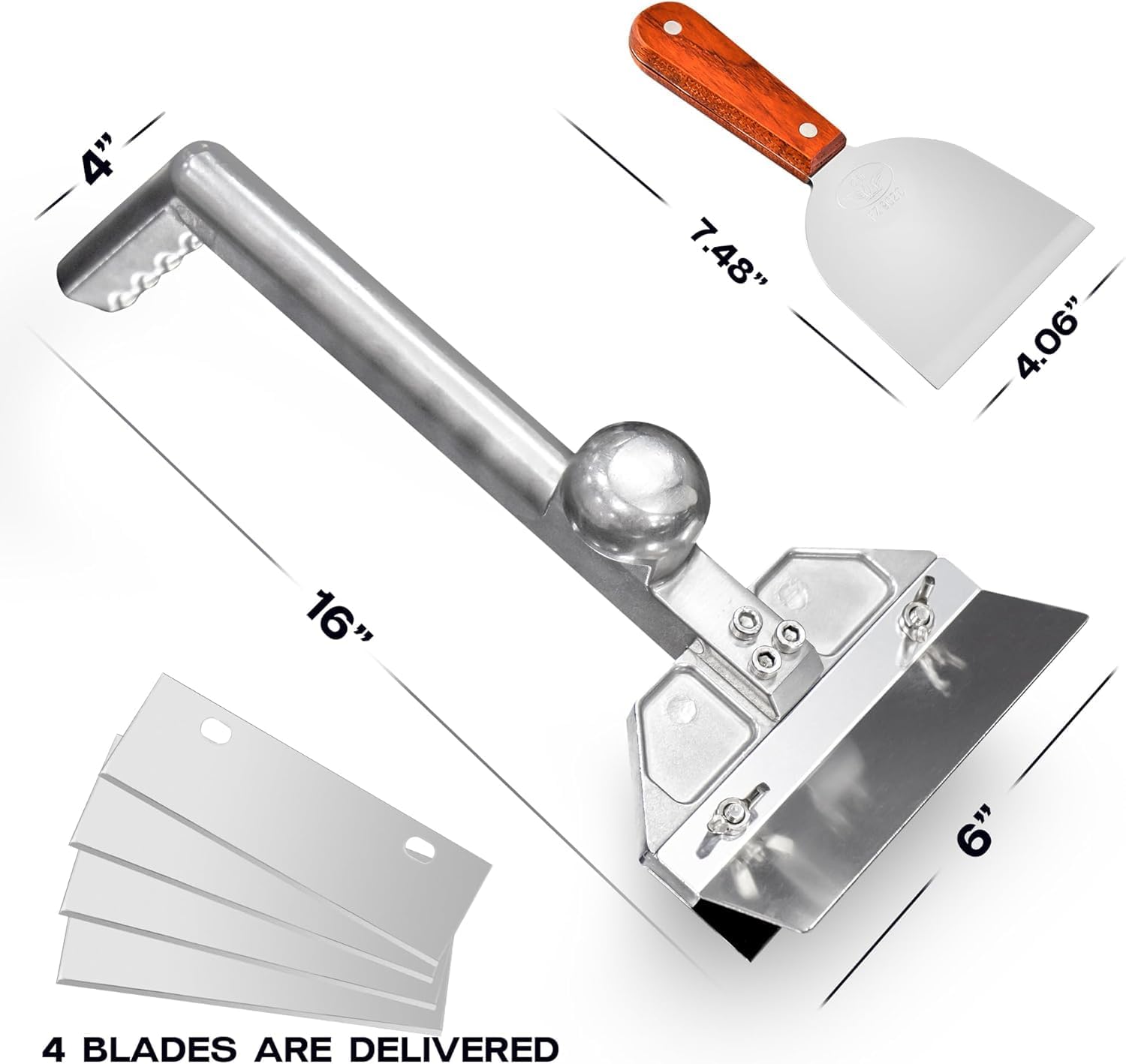
Cleaning and Re-Oiling the Right Way
After cooking:
- scrape food residue while warm
- wipe clean with paper towels
- apply a very thin oil coat
This step protects against moisture and keeps the seasoning alive. A flat-top griddle scraper makes cleaning faster and prevents carbon buildup that interferes with seasoning.
One Simple Oil Strategy That Works
Many experienced Blackstone users follow this simple system:
- Avocado or grapeseed oil for seasoning
- Same oil for high-heat cooking
- Butter or light olive oil only when flavor matters
This approach keeps the surface stable and avoids most common issues.
Final Thoughts
The best oil for a Blackstone griddle isn’t about trends or brand loyalty. It’s about matching oil properties to how a flat-top actually works. High heat demands high smoke points. Neutral flavor keeps food tasting right. Thin layers create durable seasoning.
Get those fundamentals right, and your Blackstone will only improve with time—no matter which of the recommended oils you choose.