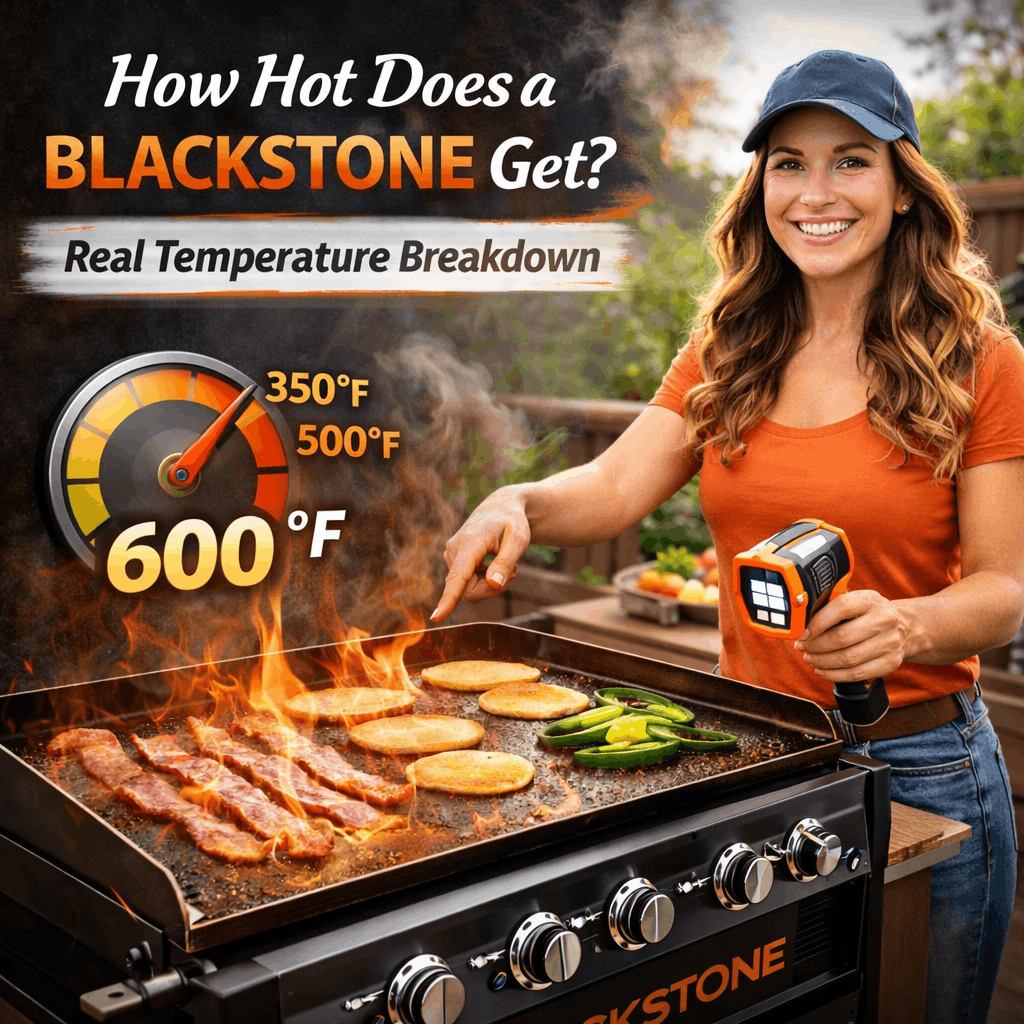
One of the most common questions new owners ask is: how hot does a Blackstone get?
The short answer:
A propane Blackstone gas griddle can reach 650°F to 700°F under ideal conditions.
But that doesn’t mean you’ll cook at that temperature every day.
Most residential Blackstone models operate comfortably between 300°F and 550°F, depending on burner setting, environment, and fuel flow.
Understanding these temperature ranges is important because different foods require different heat levels. And if you’re not sure what your griddle is actually reaching, you may overcook or undercook your food.
Let’s break it down clearly.
Table of Contents
Maximum Temperature: 650°F–700°F – How Hot Does a Blackstone Get?
When fully preheated with all burners on high for 10–15 minutes, most propane Blackstone griddles can exceed 650°F.
Some users report hitting 700°F in warm, low-wind environments.
This level of heat is typically used for:
- Extreme searing
- Smash burgers
- Quick crust formation
- Burn-off cleaning
It is not meant for long-duration cooking.
If you leave food on at 650°F for too long, it will burn quickly.
Medium-High Range: 425°F–550°F
This is the performance range most Blackstone owners love.
At 425–550°F you can:
- Sear steaks
- Cook smash burgers
- Brown sausage
- Stir-fry vegetables
- Make hibachi-style meals
This range delivers a crispy exterior while keeping moisture inside.
For smash burgers especially, around 500°F gives you that signature crust.
Medium Heat: 350°F–400°F
This is the “sweet spot” for everyday cooking.
At 350–400°F you can:
- Cook chicken breast
- Fry bacon
- Make grilled sandwiches
- Cook breakfast items
- Heat tortillas
Most griddling happens here.
It provides even cooking without burning the exterior.
Low Heat: 300°F–325°F
Blackstone griddles are powerful, and some models struggle to stay very low unless you turn off certain burners.
At 300–325°F you can:
- Cook eggs
- Warm buns
- Slow cook vegetables
- Toast lightly
On larger 4-burner models, you can create a low zone by turning one burner down or off.
Propane vs Electric Blackstone Heat
Fuel source matters.
Propane Gas Models
Most propane Blackstones:
- Reach 650°F+
- Heat up faster
- Deliver stronger searing power
- Provide better outdoor performance
This is why gas models are preferred for high-heat cooking.
Electric E-Series Models
Electric Blackstone griddles:
- Typically max around 500°F
- Offer consistent indoor-safe heating
- Provide more controlled temperature settings
They do not reach the extreme searing temperatures of propane models.
If maximum heat is important to you, propane wins.
Why Your Blackstone May Not Reach 600°F
If your griddle struggles to get past 350°F–400°F, one of these factors is likely the cause.
1. Regulator Safety Lock
If propane flow is restricted, your regulator may be in safety mode.
Symptoms:
- Weak flame
- Won’t exceed 350°F
- Flames appear small
Reset by:
- Turn off burners
- Turn off propane tank
- Disconnect regulator
- Wait 5 minutes
- Reconnect and open tank slowly
This restores proper flow.
2. Wind Conditions
Wind dramatically reduces surface temperature.
Even light wind can lower surface heat by 50–100°F.
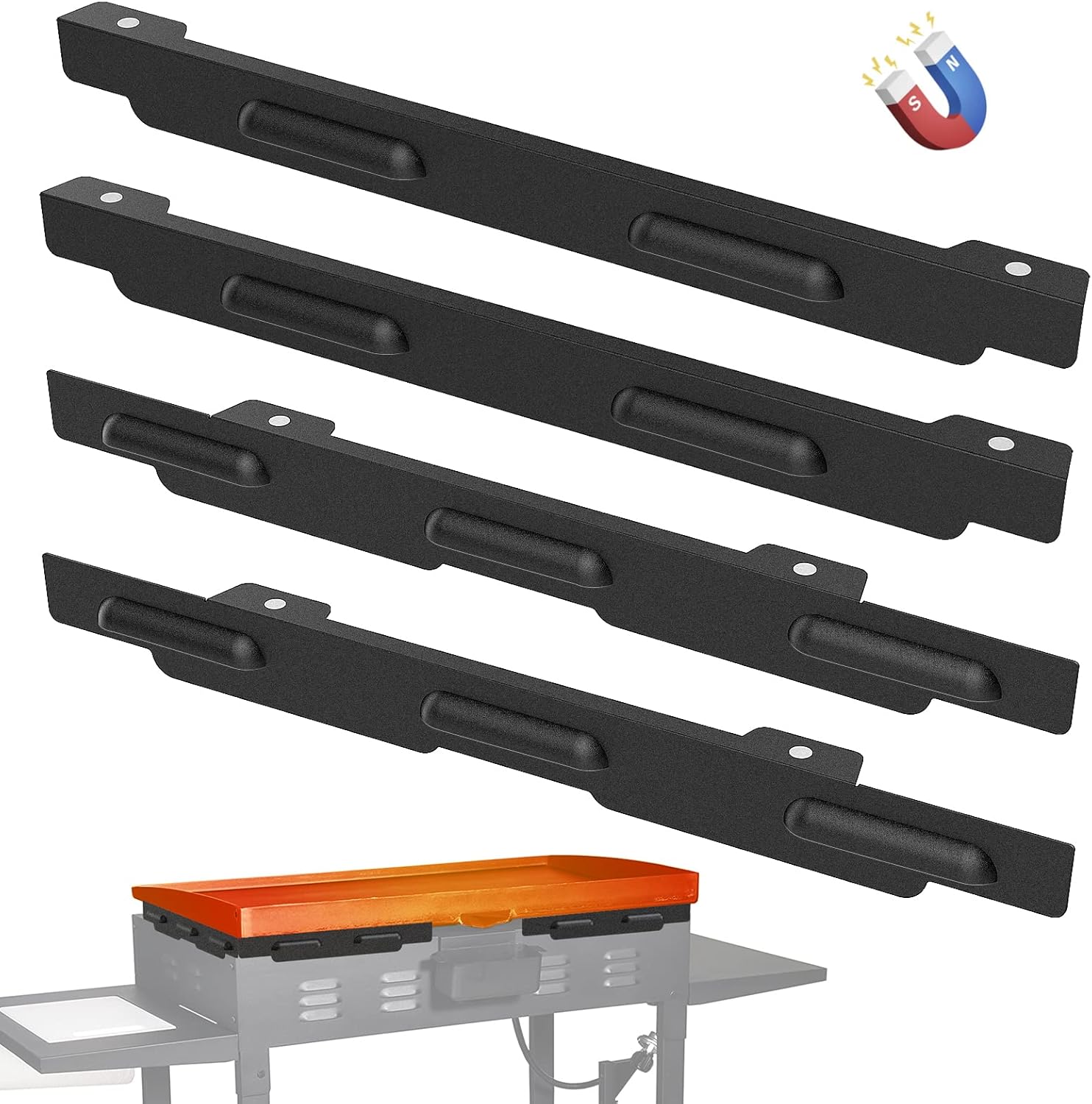
Using magnetic wind guards for Blackstone griddles can help maintain higher temperatures and reduce propane waste.
Wind protection makes a noticeable difference in outdoor cooking performance.
3. Cold Weather
Cold air and cold steel absorb heat.
Preheating may take longer in winter.
Expect slightly lower max temps in freezing conditions.
4. Burner Blockage
Clogged burners reduce flame output.
Check for:
- Rust flakes
- Spider webs
- Grease buildup
Cleaning burner tubes often restores full heat.
Understanding Hot Zones
Blackstone griddles create natural heat zones.
The center directly above burners is hottest.
Edges and corners are cooler.
On a 4-burner 36-inch model, you can create:
- High heat zone (two burners on high)
- Medium zone (one burner medium)
- Low warming zone (one burner low/off)
This is one of the biggest advantages of larger Blackstone models.
You can cook multiple foods at different temperatures simultaneously.
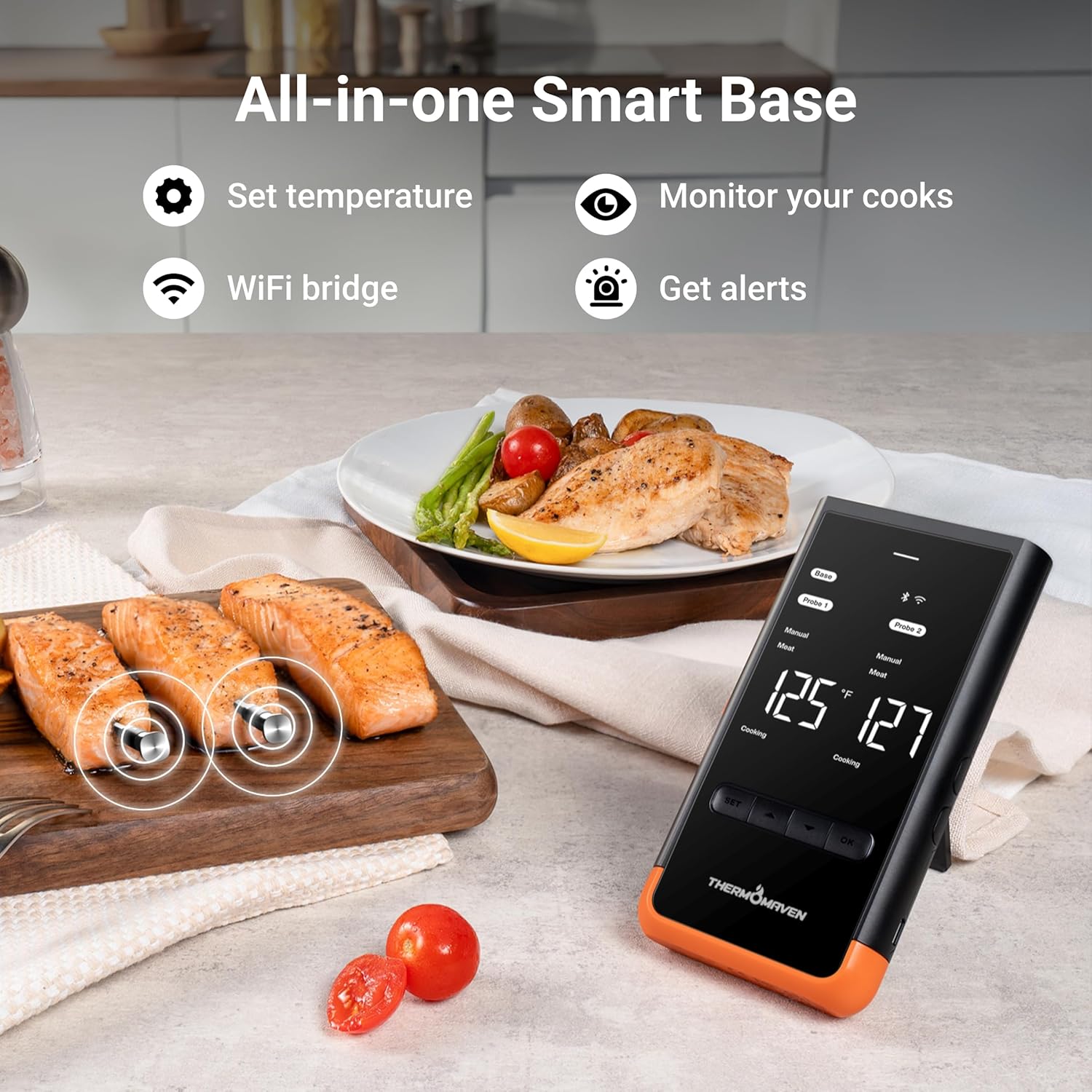
How to Measure Real Surface Temperature
Knob settings do not show exact temperature.
The most accurate way to check surface heat is using a digital infrared thermometer for flat top grills.
This allows you to:
- Verify preheat temperature
- Identify hot spots
- Adjust burners precisely
- Avoid overcooking
Simply point at the surface and get an instant reading.
Many experienced users rely on infrared thermometers for consistent results.
Ideal Preheat Time
Most propane models need:
10–15 minutes on high
Before reaching peak temperature.
Electric models may take slightly longer.
Never judge heat by touching the surface — always use proper tools.
Is 700°F Safe?
Yes, but it should be used properly.
Extreme heat is best for:
- Initial searing
- Cleaning burn-off
- Quick crust formation
It is not for slow cooking.
High heat for extended time can:
- Warp thin plates
- Burn seasoning
- Waste propane
Use it strategically.
Does Bigger Blackstone Mean Hotter?
Not necessarily.
A 36-inch Blackstone doesn’t get hotter than a 28-inch.
It simply provides:
- More burners
- More surface area
- More heat zones
Max temperature is similar across propane models.
Temperature Summary Chart
High (Max): 650–700°F
Medium-High: 425–550°F
Medium: 350–400°F
Low: 300–325°F
Electric models: up to 500°F
Propane models: up to 700°F
Blackstone Smoker Grill – Pellet, Griddle & Combo Models Explained
Final Thoughts
So how hot does a Blackstone get?
Under ideal conditions, a propane model can reach 650°F to 700°F.
But everyday cooking usually happens between 350°F and 550°F.
Understanding temperature zones helps you cook smarter, not hotter.
Use high heat when needed.
Create zones for control.
Measure surface temperature accurately.
Protect against wind.
When used correctly, Blackstone griddles deliver both extreme searing power and balanced everyday cooking performance.
Blackstone Smoker Grill – Pellet, Griddle & Combo Models Explained