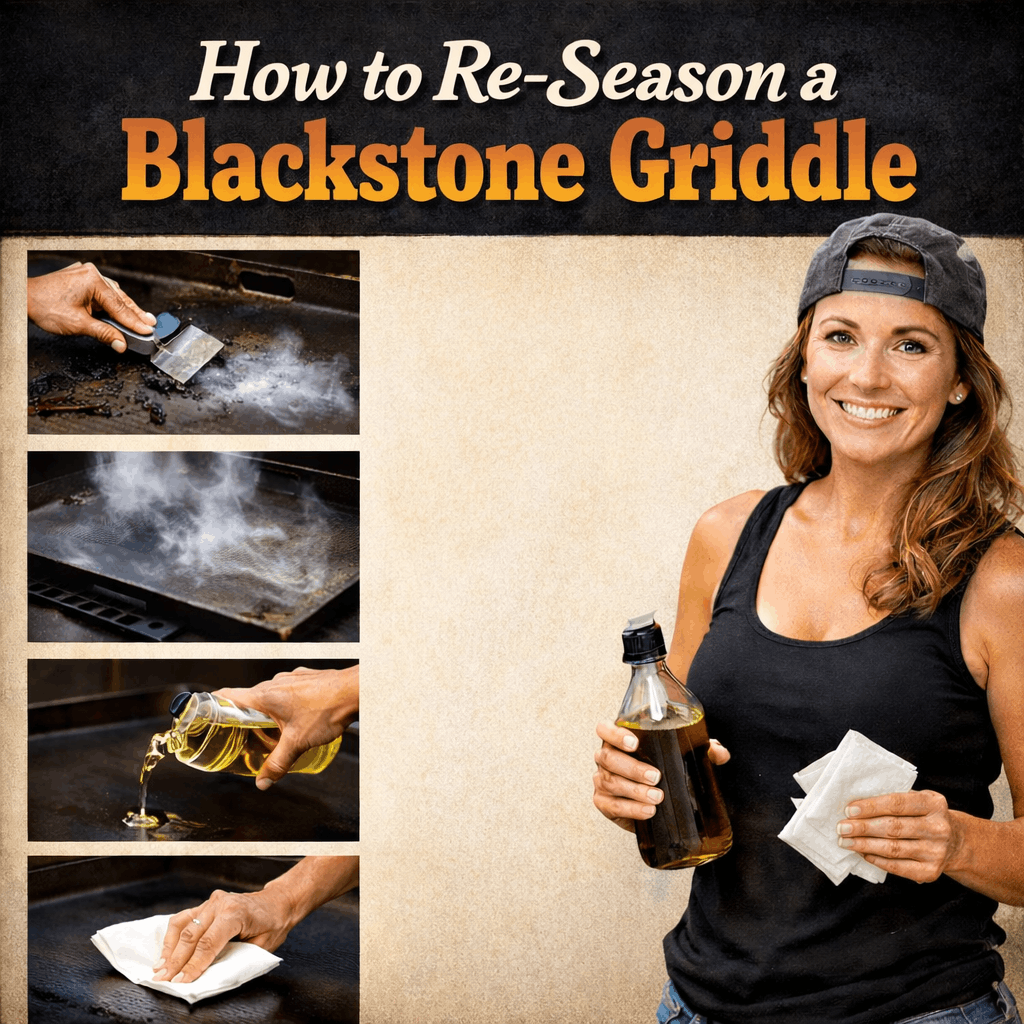
How to Re-Season a Blackstone Griddle
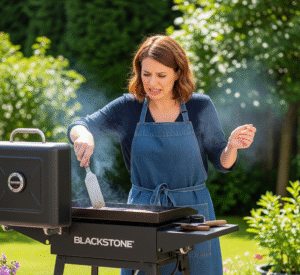
Over time, even a well-maintained Blackstone griddle may need to be re-seasoned. Maybe food started sticking. Maybe rust spots appeared after storage. Or maybe the surface looks dull and uneven.
The good news is this:
Re-seasoning a Blackstone griddle is completely normal and fully fixable.
Because the cooking surface is cold-rolled steel, it can always be restored. You’re not dealing with a fragile non-stick coating. You’re working with durable metal that responds well to proper heat and oil.
This guide walks you through how to re-season your Blackstone the right way — whether you’re dealing with light wear or visible rust.
Table of Contents
When Do You Need to Re-Season? – How to Re-Season a Blackstone Griddle
You don’t need to re-season after every cook. But you should re-season if you notice:
- Rust patches
- Flaking seasoning
- Sticky buildup
- Excessive food sticking
- Uneven discoloration
Small issues can often be fixed with spot seasoning. Larger areas require a full re-season.
Step 1: Clean and Restore the Surface
Before applying new oil, the old surface must be properly cleaned.
For Light Buildup
- Heat the griddle slightly
- Use a scraper to remove food debris
- Wipe clean with paper towels
For Rust or Heavy Debris
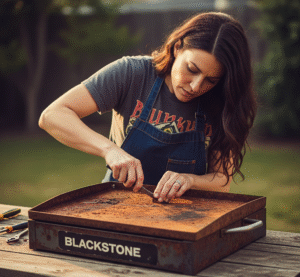
If rust is present, you’ll need to remove it first.
- Scrape loose rust while warm
- Use a grill stone or fine steel wool to scrub affected areas
- For stubborn rust, lightly spray white vinegar to help dissolve oxidation
- Rinse and dry immediately
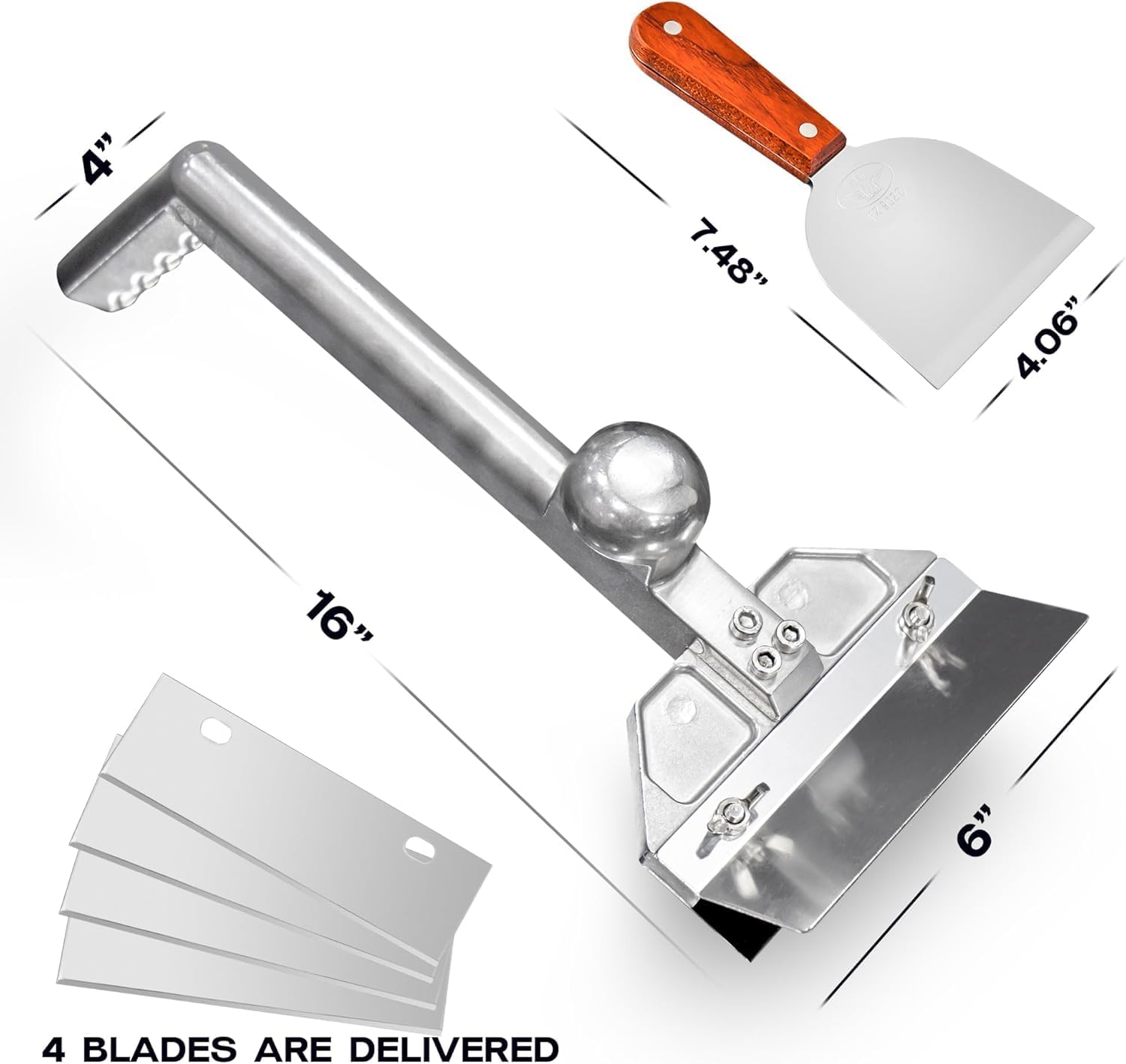
A flat-top griddle scraper is essential during this stage to remove loose residue efficiently and prevent uneven seasoning layers later.
The surface does not need to look brand new, but it must be free of flaking material and moisture.
Step 2: Preheat to High Heat
Turn all burners to high.
Let the griddle heat for about 10–15 minutes until:
- The metal begins to discolor
- Moisture fully evaporates
- The surface appears dry
This opens the pores of the steel and prepares it for bonding.
Step 3: Apply a Very Thin Layer of Oil
This is where many people make mistakes.
Use a high smoke point oil such as:
- Refined avocado oil
- Grapeseed oil
- Canola oil
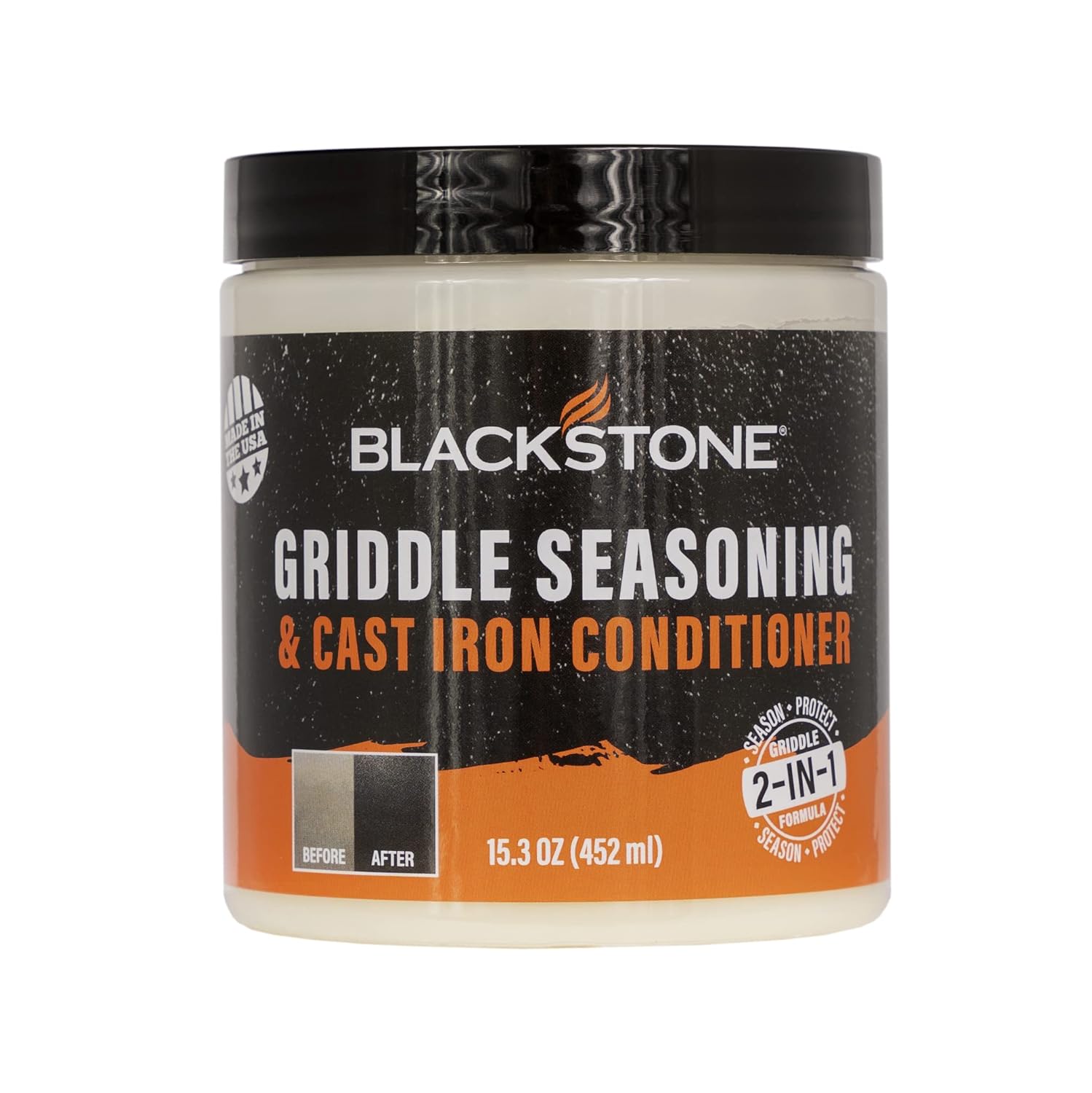
- Blackstone Griddle Seasoning & Cast Iron Conditioner
The key is thin layers.
- Drip a small amount of oil onto the surface
- Use tongs and folded paper towels
- Spread oil across the entire cooktop
- Include edges and corners
Then wipe it down again until it looks almost dry.
Thick oil layers cause sticky buildup. Thin layers cure properly.
Step 4: Let It Burn Off Completely
Keep the burners on high.
The oil will begin to smoke. This is expected.
Allow the griddle to stay on high heat until:
- The smoke stops
- The surface looks matte
- The oil appears dry
This usually takes 5–15 minutes depending on weather and oil type.
Do not apply another layer until smoke has completely stopped.
Step 5: Repeat 3 to 5 Times
Re-seasoning requires multiple layers to rebuild the protective coating.
Repeat:
- Thin oil application
- Full smoke cycle
Three layers are often enough for light restoration.
Five layers are better for heavy wear or rust repair.
With each round, the surface should become darker and smoother.
Best Oils for Re-Seasoning
For strong polymerization, use oils with high smoke points.
Refined Avocado Oil
- Smoke point around 520°F
- Very stable under high heat
- Produces durable layers
Grapeseed Oil
- High smoke point
- Dries evenly
- Bonds well
Canola Oil
- Budget-friendly
- Reliable results
Blackstone Griddle Seasoning & Conditioner
Specifically formulated for Blackstone steel, this blend helps simplify the seasoning process and reduce uneven bonding, especially for beginners.
Avoid:
- Extra virgin olive oil
- Butter
- Bacon grease
- Low smoke point oils
How Long Does Re-Seasoning Take?
Total time depends on how many layers you apply.
Typical breakdown:
- Cleaning: 15–30 minutes
- Preheating: 10–15 minutes
- Each oil layer: 10–15 minutes
- 3–5 layers total
Expect about 1 to 2 hours for full re-seasoning.
Should You Strip the Surface Completely?
Full stripping is only necessary if:
- Rust covers large areas
- Seasoning is flaking heavily
- Surface feels rough and uneven
Otherwise, light sanding and multiple oil layers are sufficient.
Safety Tips
Re-seasoning involves high heat and smoke.
Always:
- Work outdoors
- Keep burners on stable surface
- Use heat-resistant gloves
- Avoid over-applying oil
High heat is necessary, but control is important.
After Re-Seasoning: First Cook
After finishing the final layer:
- Let the griddle cool slightly
- Apply one final thin oil wipe
- Cook something simple first (like onions or breakfast items)
Many experienced users cook sliced onions as the first post-season cook to help strengthen bonding.
How to Prevent Needing Frequent Re-Seasoning
Proper maintenance reduces the need for full restoration.
After each cook:
- Scrape while warm
- Wipe clean
- Apply a very thin oil coat
- Cover the griddle
Moisture is the main enemy of steel.
What If Rust Returns?
Rust can reappear if:
- Griddle is stored uncovered
- Oil maintenance was skipped
- Humidity is high
The solution is simple:
Scrub lightly, heat, and apply fresh thin layers again.
Cold-rolled steel is forgiving. It can be restored repeatedly.
Blackstone 36 Griddle Top Replacement – What to Buy & When to Replace
Final Thoughts
Re-seasoning a Blackstone griddle isn’t a sign of failure. It’s normal maintenance.
Because the surface is solid steel, it can always be restored. With:
- Proper cleaning
- High heat
- Thin oil layers
- Patience
Your griddle will return to a smooth, dark, non-stick finish.
Done correctly, re-seasoning doesn’t just fix problems — it strengthens your cooking surface for the long term.
Blackstone 36 Griddle Top Replacement – What to Buy & When to Replace