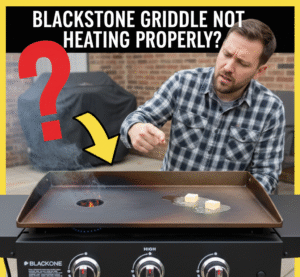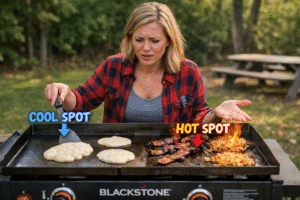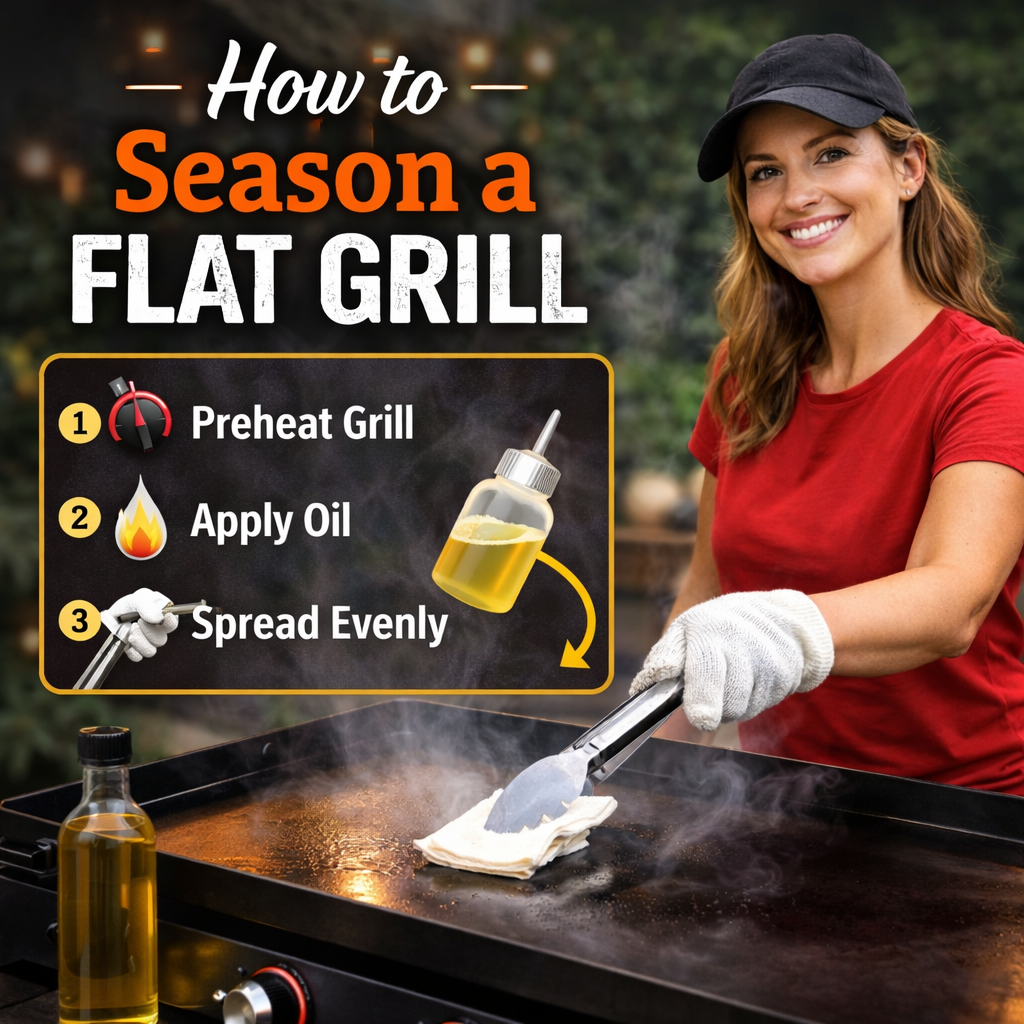
Learning how to season a flat grill properly is one of the most important steps in owning a griddle or flat-top grill.
Seasoning creates a natural, durable, non-stick surface while protecting the metal from rust. When done correctly, your grill surface will improve with every cook.
If done incorrectly, you may deal with:
- Sticky buildup
- Flaking layers
- Rust spots
- Uneven cooking
The good news? The process is simple once you understand the basics.
Let’s walk through everything step by step.
Table of Contents
What Does “Seasoning” Actually Mean?
Seasoning is the process of bonding oil to metal using high heat.
When oil is heated past its smoke point, it undergoes polymerization. This means:
- The oil hardens
- It bonds to the steel
- It forms a protective layer
- It creates a non-stick cooking surface
Over time, repeated cooking builds up layers, turning the grill dark brown or black.
That black surface is what you want.
Why Seasoning Is Important
Proper seasoning:
Prevents rust
Improves non-stick performance
Enhances flavor
Extends grill lifespan
Reduces food sticking
Without seasoning, a flat-top grill will quickly rust and lose performance.
Essential Supplies
Before starting, gather the right tools.
High Smoke Point Oil
Use vegetable, canola, grapeseed, avocado, or flaxseed oil. Avoid butter or bacon grease for the first seasoning.
Cleaning Supplies
Mild dish soap (only for first wash), warm water, paper towels.
Application Tools
Long-handled tongs and folded paper towels.
Safety
Heat-resistant gloves.
Step 1 – Initial Cleaning (New Grill Only)
If your grill is brand new, it has a factory coating.
This must be removed before seasoning.
- Mix warm water with mild dish soap.
- Scrub the entire cooking surface.
- Rinse thoroughly.
- Dry immediately with paper towels.
Important:
This is the only time you should use soap on your grill surface.
Dry completely to prevent flash rusting.
Step 2 – Preheat the Grill
Turn all burners to high.
Let the grill heat for 10–15 minutes.
You’ll notice:
- Metal darkening
- Slight discoloration
- Possible light smoke
This is normal.
Preheating opens the pores of the steel so oil can bond properly.
Step 3 – Apply a Thin Layer of Oil
Once hot:
- Pour 2–3 tablespoons of oil onto the surface.
- Use tongs and paper towels to spread it evenly.
- Cover the entire cooktop, including sides and corners.
The key word here is THIN.
You should wipe it so thin that it almost looks like you’re trying to remove it.
Thick oil layers cause sticky buildup.
Step 4 – Burn Off the Oil
Let the oil heat until it stops smoking.
This usually takes 10–15 minutes.
During this stage:
- The oil polymerizes
- It bonds to the steel
- The surface begins to darken
Wait until the smoke fully stops before moving to the next layer.
Step 5 – Repeat the Process
For a strong base layer, repeat the oiling and burn-off process 3 to 5 times.
Each round builds:
- Thickness
- Durability
- Non-stick performance
You’ll see the surface transition from:
Silver → Light brown → Dark brown → Glossy black
That glossy black finish is what you want.
Step 6 – Cool Down Properly
After the final layer:
Turn off the burners.
Let the grill cool naturally.
Do not cover it while hot.
Covering a hot grill traps moisture and can cause rust.
Which Blackstone to Buy? (Complete Size & Model Guide)
How Long Does Seasoning Take?
The full process typically takes:
1 to 2 hours
Most of that time is waiting for burn-off cycles to finish.
It’s a one-time investment for long-term performance.
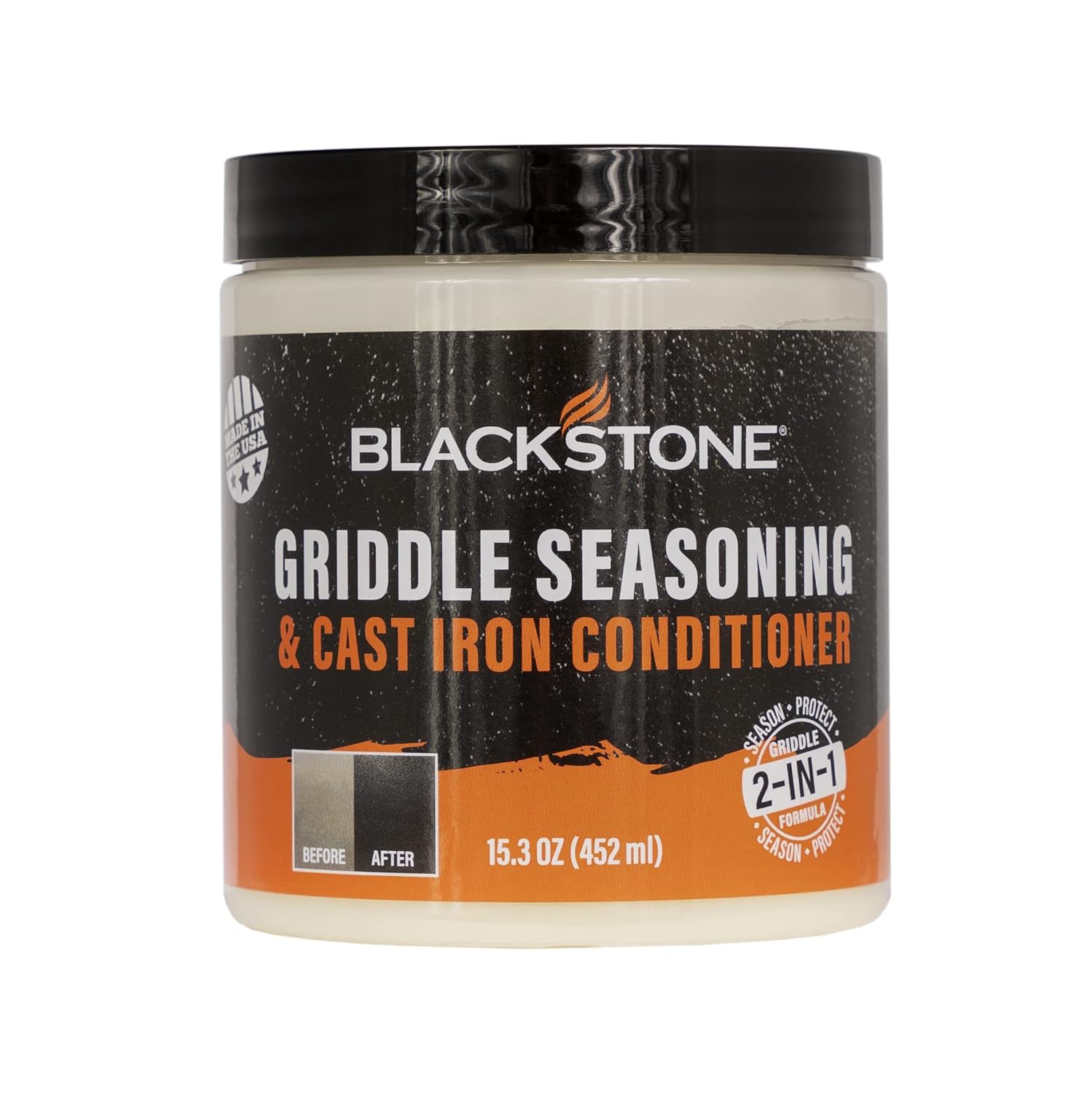
Best Oils for Seasoning
Choose oils with high smoke points.
Good options:
Avocado oil (very high smoke point)
Grapeseed oil
Canola oil
Vegetable oil
Flaxseed oil creates a hard coating but can flake if applied too thick.
Avoid:
Butter
Bacon grease
Olive oil (low smoke point)
For the first seasoning, stick to neutral high-smoke oils.
Common Seasoning Mistakes
Applying too much oil
Not waiting for smoke to stop
Skipping preheat
Using low-smoke oils
Covering grill while hot
Most sticky surfaces come from too much oil.
Always think paper-thin layers.
How to Maintain Seasoning
Seasoning isn’t a one-time thing. It improves over time.
After Every Cook:
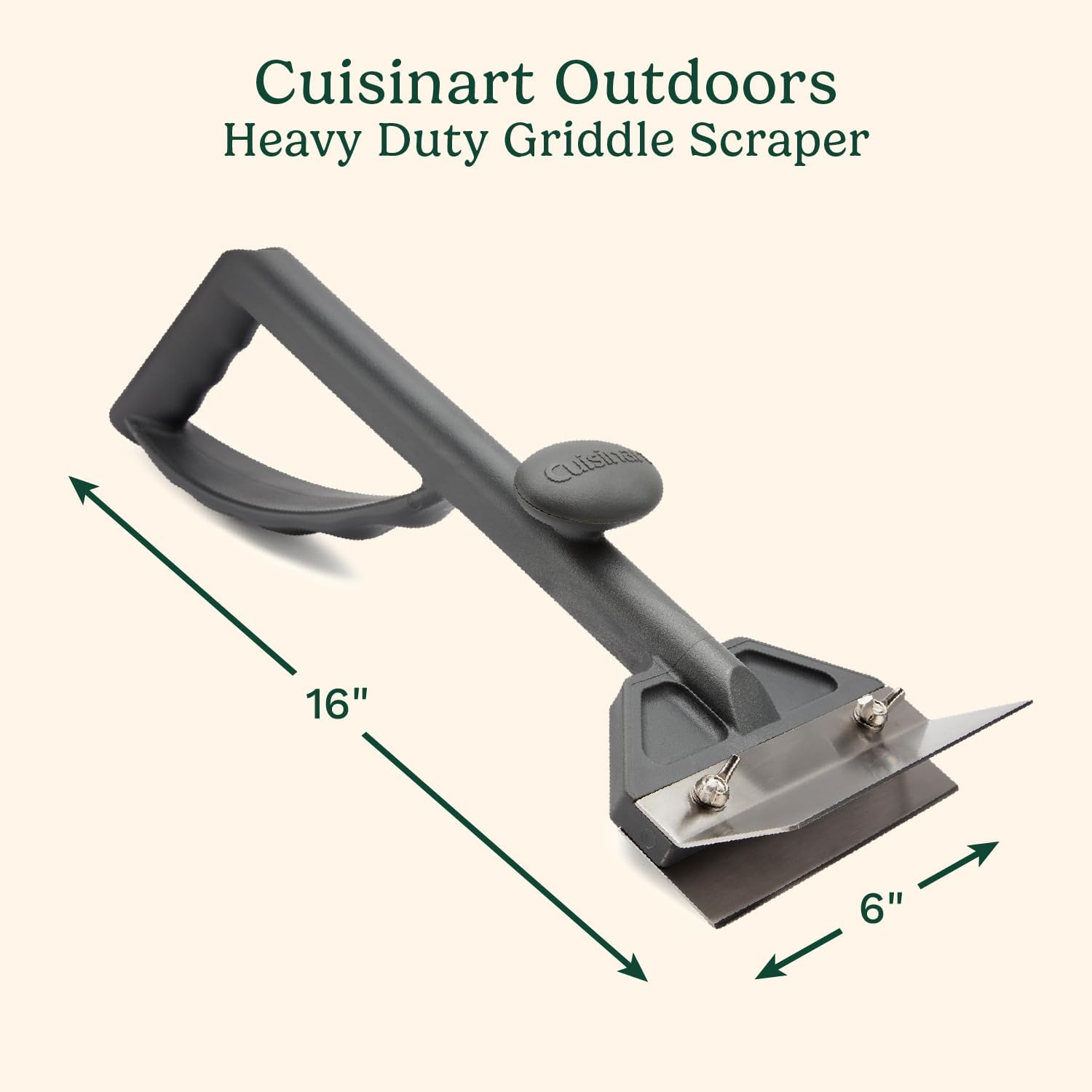
Scrape debris while grill is still warm.
Wipe surface clean with paper towels.
Apply a very thin layer of oil.
That thin layer prevents moisture and rust.
Never soak with water after cooking.
Can You Use Soap After Cooking?
No.
Soap strips the seasoning layer.
After the initial factory cleaning, avoid soap completely.
If deep cleaning is needed:
Use hot water and a scraper.
Dry immediately.
Re-season lightly.
What If Rust Appears?
If small rust spots appear:
- Heat the grill.
- Scrape aggressively.
- Use a grill stone if needed.
- Wipe clean.
- Re-season with 2–3 thin layers.
Rust is fixable as long as you address it early.
How Often Should You Re-Season?
Light touch-up seasoning can be done anytime the surface looks:
Dry
Dull
Patchy
Gray
Full re-seasoning is only necessary if:
Heavy rust forms
Seasoning flakes
Surface becomes uneven
With proper maintenance, full reseasoning is rarely needed.
Which Blackstone to Buy? (Complete Size & Model Guide)
Pro Tips for Better Results
Cook onions after first seasoning — sulfur helps bonding.
Use high heat during burn-off.
Keep oil layers extremely thin.
Store with a cover once completely cool.
The more you cook, the better your seasoning becomes.
Final Thoughts
Knowing how to season a flat grill properly ensures:
Better non-stick performance
Protection against rust
Longer grill lifespan
Improved cooking results
The process is simple:
Clean once
Preheat
Apply thin oil
Burn off
Repeat
Take your time during the first seasoning session. It sets the foundation for every meal you cook afterward.
Once seasoned properly, your flat-top grill will only get better with use.