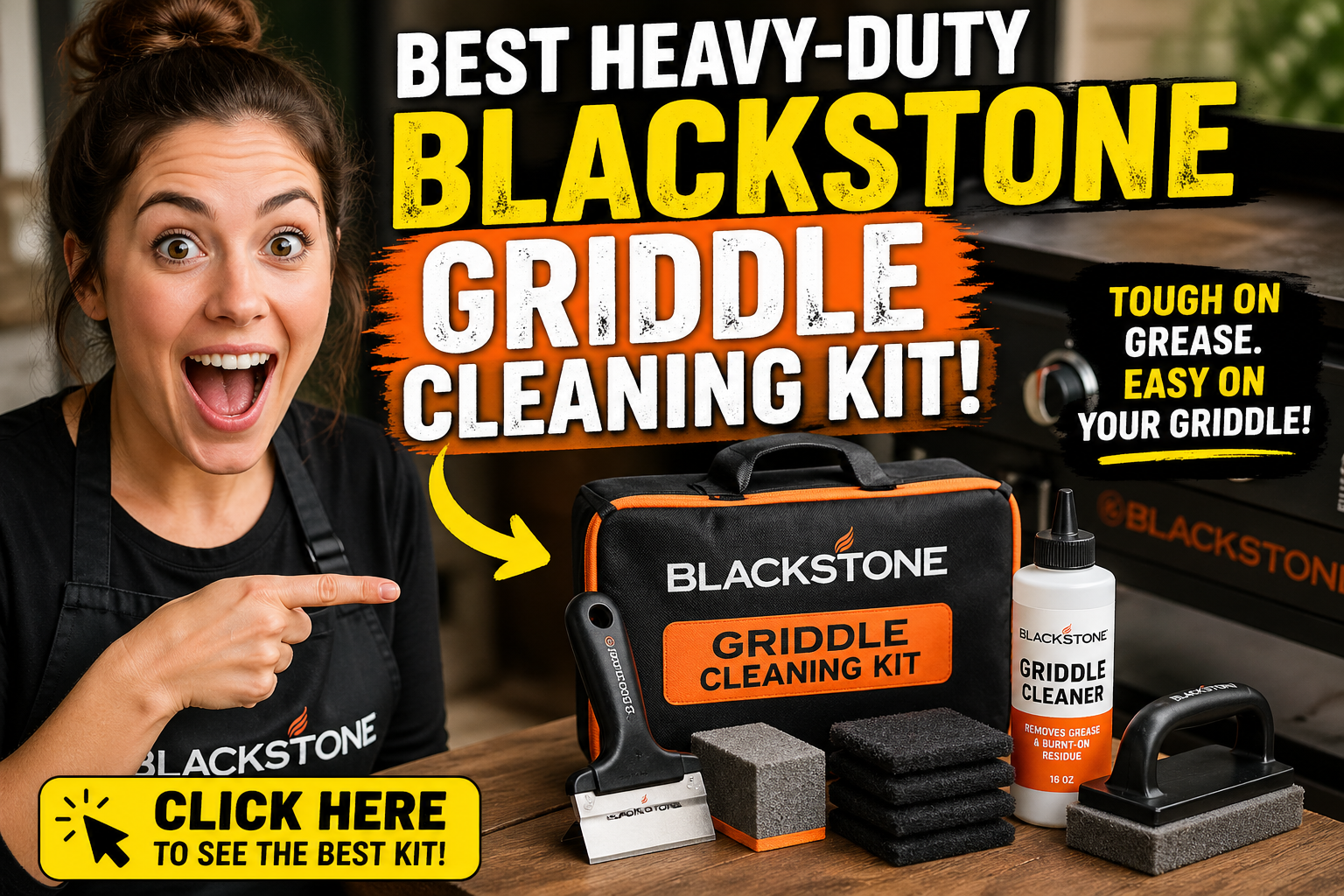
Best Heavy-Duty Blackstone Griddle Cleaning Kit
Your Blackstone griddle has quickly become the heart of your outdoor kitchen. From Saturday morning pancakes to Friday night smash burgers, that seasoned steel surface has seen it all. But after the last burger is flipped and the final guest leaves, you’re left staring at a greasy, food-crusted cooking surface that needs attention.
I remember the first month I owned my Blackstone. I was obsessed with cooking on it but completely clueless about cleaning. I’d scrape it half-heartedly with a cheap scraper, wipe it with paper towels, and call it a day. Big mistake. Within weeks, I noticed rust spots forming, food started sticking, and that beautiful non-stick seasoning I’d worked so hard to build was falling apart.
The turning point came when I finally invested in a proper heavy-duty Blackstone cleaning kit. The difference was immediate and dramatic. In just 15 minutes, my griddle looked better than the day I bought it.
If you’re wondering whether a dedicated cleaning kit is worth the money, or which one is right for your needs, you’re in the right place. Let me walk you through everything I’ve learned about keeping your griddle in showroom condition.
Table of Contents
Why a Heavy-Duty Cleaning Kit Matters – Best Heavy-Duty Blackstone Griddle Cleaning Kit
The Problem with Improvising
You might think a regular spatula and some paper towels can handle griddle cleanup. And for light daily maintenance, you’re not completely wrong. But heavy-duty griddle care requires tools designed specifically for the job.
Here’s what happens when you don’t use proper cleaning tools:
Rust Development: Without thorough debris removal, moisture gets trapped against the steel surface. Rust spots appear quickly and spread fast.
Uneven Seasoning: Food residue you can’t see creates bumps and rough patches. These spots don’t season properly, creating a cycle of sticking.
Cross-Contamination: Old food particles are a breeding ground for bacteria. Your next meal cooks on top of yesterday’s residue.
Shortened Griddle Life: A poorly maintained griddle top can warp or corrode much faster than a properly cared-for one.
What Makes a Kit “Heavy-Duty”
Not all cleaning tools are created equal. Here’s what separates a heavy-duty kit from a basic one:
- Stainless Steel Construction: The scraper blade must be thick-gauge stainless steel that won’t bend or warp when you apply pressure .
- Multiple Abrasive Levels: Light-duty kits may only have scrub pads. Heavy-duty kits include pumice cleaning bricks for deep restoration work when your griddle needs resurfacing .
- Ergonomic Handles: When you’re scrubbing hard, comfort matters. Quality handles reduce hand fatigue and give you better leverage.
- Dishwasher Safe Components: Being able to toss pads and handles in the dishwasher saves time and ensures proper sanitization between uses .
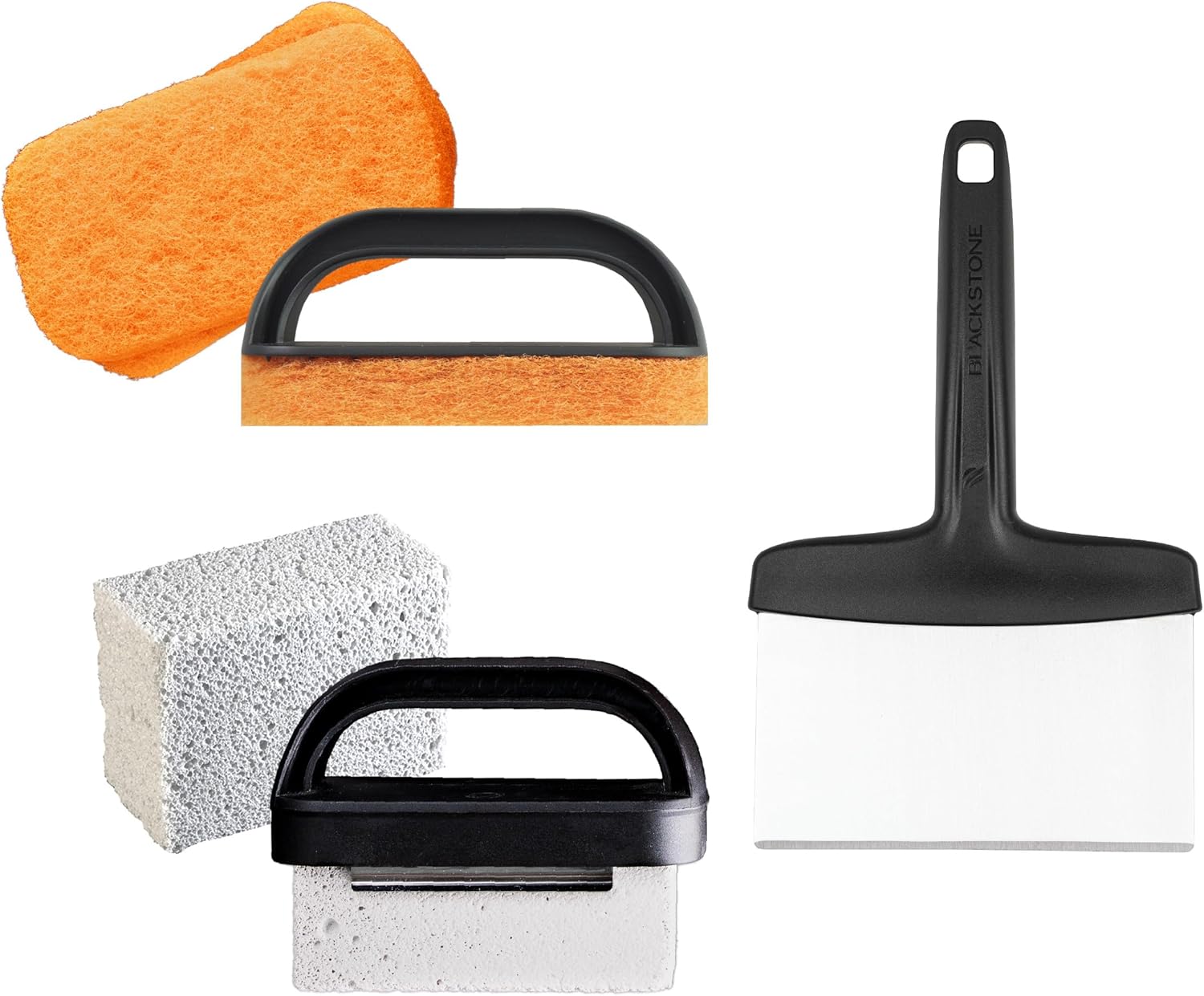
The Blackstone 8-Piece Professional Cleaning Kit: The Heavy-Duty Champion
After testing various cleaning tools and kits, the Blackstone 8-Piece Professional Griddle Cleaning Kit stands out as the clear choice for heavy-duty maintenance. This is the kit I personally use, and here’s why it’s earned a permanent spot next to my griddle.
What’s Included in the Box
The 8-piece kit provides a complete system for both daily cleaning and periodic deep restoration :
| Component | Purpose | Quantity |
|---|---|---|
| 6-inch Heavy-Duty Stainless Steel Scraper | Removes debris, cooked-on food, and grease | 1 |
| Scour Pad Handle | Holds replaceable scouring pads | 1 |
| Replaceable Scour Pads | Daily cleaning on wet or dry surfaces | 3 |
| Cleaning Brick Handle | Holds pumice bricks for resurfacing | 1 |
| Cleaning Bricks | Deep clean, rust removal, seasoning restoration | 2 |
Total Pieces: 8 individual components working together as a complete system.
Deep Dive into Each Component
The 6-Inch Stainless Steel Scraper
This is your daily workhorse. The wide 6-inch blade covers more surface area with each pass, making quick work of post-cook cleanup. The stainless steel construction means it won’t rust, even if you accidentally leave it outside. The edge is sharp enough to remove stubborn debris but won’t gouge your seasoning if used properly.
Pro tip I learned the hard way: Hold the scraper at roughly a 30-degree angle. Too steep and you’ll dig into your seasoning layer. Too flat and you won’t grab the stuck-on bits effectively.
The Scour Pads
These pads attach to a dedicated handle, giving you controlled scrubbing power exactly where you need it. They can be used wet or dry, and the open-weave design resists clogging. After cleaning, a quick rinse is all they need. When they wear out, replacements are readily available.
I use these for mid-level cleaning—when scraper alone isn’t enough, but I don’t need to break out the heavy artillery.
The Cleaning Bricks
These are the secret weapons for heavy-duty restoration . Made from pumice material similar to grill bricks, they’re designed to tackle what the scraper and pads can’t handle:
- Rust removal: Light surface rust disappears with brick treatment
- Seasoning reset: When your seasoning layer is uneven and needs a fresh start
- Stubborn residue: Carbon buildup that’s been baked on over multiple cooking sessions
Using the brick requires a bit of technique. Apply light even pressure and let the brick do the work. Use a lubricant like water or cooking oil to prevent scratching. Work in small sections, and you’ll see the surface transform from dull and patchy to clean bare steel ready for fresh seasoning.
Why 8 Pieces Matters
You might wonder why 8 pieces when some kits offer fewer. The answer is versatility. Your griddle needs change:
- After a simple breakfast: Quick scrape, maybe a light pad scrub
- After a greasy burger session: Scraper plus pad with some water for steam cleaning
- Monthly deep clean: Brick treatment to address any developing issues
- Seasoning reset: Bricks plus pads to prepare the surface
Having all 8 pieces means you always have the right tool for the job. No compromises, no damaging your griddle with inappropriate tools.
How to Use Your Heavy-Duty Cleaning Kit
Daily Maintenance Routine (5 Minutes)
This is what I do after every single cook:
- Start While Hot: Don’t wait for the griddle to cool completely. A warm surface releases debris easier.
- Scrape Everything: Use the stainless steel scraper at a 30-degree angle. Push all loose food and grease toward the grease trap. Work systematically from back to front.
- Steam Clean (Optional): For sticky residue, squirt a small amount of water on the warm surface. The steam will lift stubborn bits. Immediately scrape.
- Wipe Clean: Paper towels work for this stage. Wipe any remaining oil or residue.
- Protect the Surface: Apply a very thin layer of cooking oil (canola, flaxseed, or Blackstone’s conditioner) with a paper towel. This prevents rust and builds your seasoning.
Weekly Deep Clean (15 Minutes)
- Attach a Scour Pad: After scraping, use a scour pad with the handle to work any areas that still feel rough or sticky.
- Use Light Pressure: Let the pad material do the work. Excessive pressure can damage seasoning.
- Steam + Scrub: Spray water on problem areas, scrub while steaming, then wipe clean.
- Re-oil: Always finish with a protective oil layer.
Monthly Restoration (When Needed)
- Identify Problem Areas: Look for rust spots, rough patches, or areas where seasoning has flaked.
- Attach Cleaning Brick: Use the dedicated handle for comfort and control.
- Apply Lubricant: Put a small amount of oil or water on the problem area.
- Work the Brick: Use light, even pressure in circular motions. Work until the rust or damaged seasoning is removed and you see clean steel.
- Clean and Re-season: Thoroughly wipe away all residue. Apply multiple thin layers of oil, heating between each, to rebuild the seasoning in that spot.
Common Mistakes That Damage Your Griddle
Using the Wrong Scraper
A flimsy dollar-store scraper is worse than useless—it’s dangerous. Cheap metal can leave microscopic scratches that trap food and moisture. Stick with the thick-gauge stainless steel scraper designed for the job.
Cleaning Bricks on a Cold Surface
Pumice bricks work best with some lubrication and on a surface that’s not completely cold. The combination of warmth, lubricant, and brick creates an effective slurry that removes buildup without damaging the steel.
Not Drying Completely
After any cleaning that involves water, your griddle must be completely dry before oiling. Trapped moisture under oil is the fastest path to rust. I heat my griddle for 2-3 minutes after water cleaning to ensure every molecule of moisture evaporates.
Skipping the Oil Step
I’ve been guilty of this. You finish cleaning, you’re tired, and you think “I’ll oil it tomorrow.” Tomorrow comes, and you’ve got surface rust starting. The oil layer isn’t optional—it’s the barrier between your griddle and the elements.
Signs Your Griddle Needs Heavy-Duty Attention
How do you know when it’s time to break out the cleaning bricks? Look for these warning signs:
Food Sticking Despite Seasoning: If your eggs are sticking to areas that used to be non-stick, you’ve got buildup you can’t see.
Visible Rust: Any rust, even tiny spots, requires immediate brick treatment. Rust spreads.
Rough Texture: Run your hand (carefully) over the cool surface. Bumps, ridges, or rough patches mean residue is building up.
Uneven Coloring: If some areas are dark black while others are patchy or metallic, your seasoning is uneven and needs attention.
Smoke Points: If your griddle smokes in some spots more than others at the same temperature, you’ve got uneven residue that will affect cooking.
Best Burger Flipping Tools for Blackstone Griddle – Get Perfect Flips Every Time
My Personal Cleaning Experience
When I first got my cleaning kit, I was intimidated by the cleaning bricks. I’d heard horror stories about people ruining their seasoning by being too aggressive. So I avoided them for months, relying only on the scraper and pads.
The result? My griddle developed a rough, bumpy surface that looked fine from a distance but was impossible to cook on evenly. Pancakes would burn in one spot and be raw in another. Eggs stuck no matter how much butter I used.
Finally, I watched a few tutorial videos, took a deep breath, and used the brick. The process took about 20 minutes. I worked slowly, with plenty of oil as lubricant, tackling the worst spots first.
The transformation was remarkable. The rough texture disappeared. The surface became smooth and even. After reseasoning those areas, my griddle performed better than it had in months.
The lesson: Don’t be afraid of heavy-duty tools. When used correctly, they solve problems that can’t be fixed any other way.
Frequently Asked Questions
Can I use the cleaning bricks on any griddle?
The pumice bricks work on steel griddle surfaces. They should not be used on non-stick coated surfaces or porcelain-coated grates. Always verify your griddle material before using abrasive cleaning methods.
How often should I replace the scour pads?
Replace pads when they become heavily stained with grease that won’t rinse out, or when the abrasive surface is noticeably worn down. With regular use, expect 3-6 months per pad.
Will the scraper scratch my griddle?
When used at the proper angle (approximately 30 degrees) with even pressure, a quality stainless steel scraper will not scratch properly cured seasoning. Avoid using the corner of the scraper to dig at spots.
Can I put everything in the dishwasher?
The handles and pads are dishwasher safe . The scraper blade can go in the dishwasher, though I hand-wash mine to maintain the edge. The cleaning bricks should never go in the dishwasher—they’ll dissolve.
Do I need water to clean with the bricks?
Yes, always use a lubricant (water or oil) with the cleaning bricks. Dry bricking can scratch and damage your steel.
Conclusion: Invest in Your Griddle’s Future
Your Blackstone griddle represents an investment—not just in money, but in countless future meals, gatherings, and memories. A heavy-duty cleaning kit costs a fraction of what you spent on the griddle itself, and it’s the single most effective tool for protecting that investment.
The 8-piece professional kit gives you everything you need for maintenance at every level: quick daily cleanups, weekly deep scrubs, and monthly restoration work. With these tools and the techniques I’ve shared, your griddle can maintain its factory-fresh performance for years.
Don’t wait until you’re dealing with rust and stuck-on food to get serious about cleaning. Start with the right tools now, and your Blackstone will reward you with perfect sears, flawless release, and the unbeatable flavor that only a well-maintained flat-top can deliver.
Now go check your griddle. If it’s not gleaming, you know what to do.